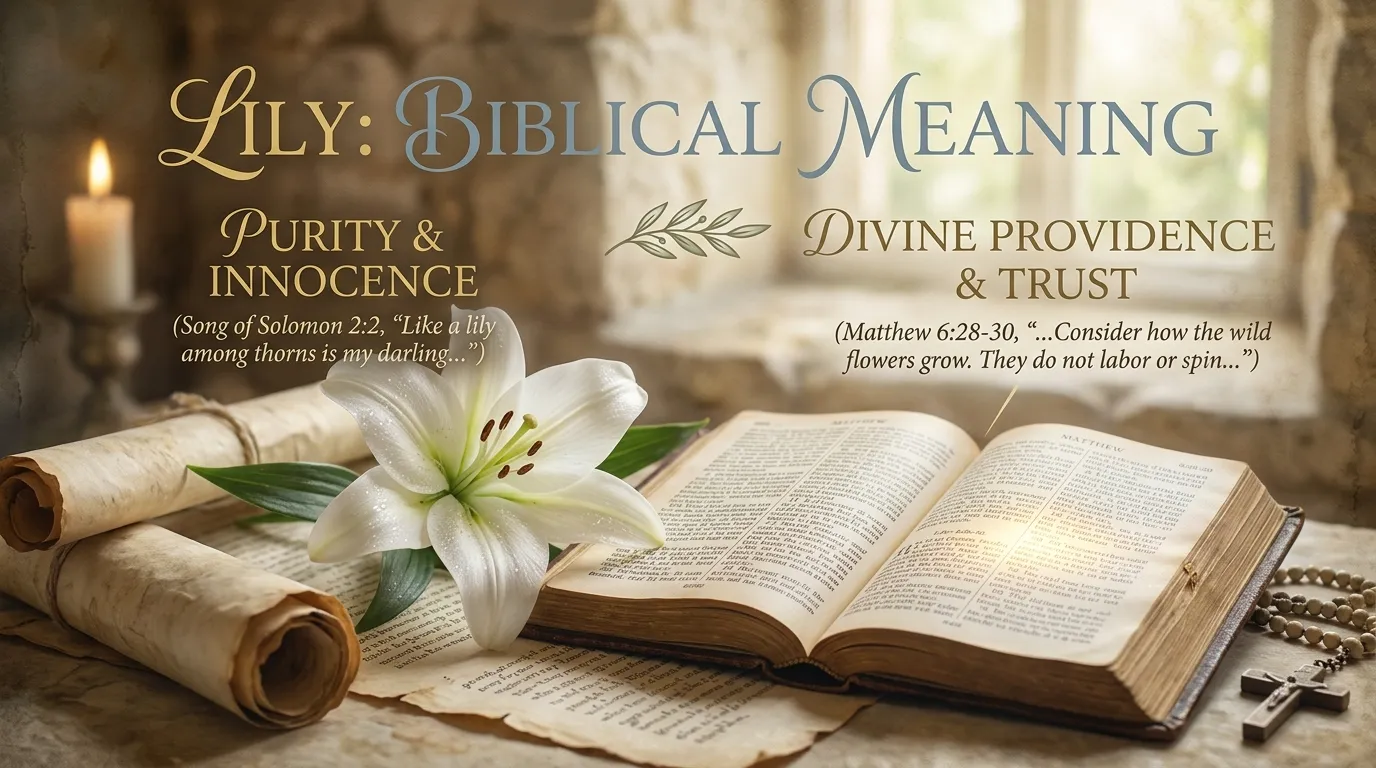
Flowers are often used in the Bible to teach important spiritual lessons, and one of the most beautiful flowers mentioned in Scripture is the lily. Because of its beauty and symbolism, many parents choose Lily as a name for their daughters and wonder about its biblical meaning.
The Lily name meaning in the Bible is closely connected to purity, beauty, faith, and God’s loving care. Although Lily is not the name of a specific person in Scripture, the flower itself appears several times and carries powerful spiritual symbolism.
Imagine walking through a peaceful field filled with white lilies swaying gently in the breeze. Their beauty seems effortless, yet they remind us of God’s creative power and provision. Jesus Himself used lilies as an example when teaching about trust and faith.
Many Christians search for the Christian meaning, biblical symbolism, and spiritual significance of the name Lily because it reflects qualities that honor God. The flower’s symbolism points to purity of heart, spiritual growth, and confidence in God’s care.
As we explore the meaning of Lily in the Bible, we will discover why this simple yet beautiful name has inspired believers for generations.
What Does the Name Lily Mean?
The name Lily comes from the lily flower, which is known for its beauty, elegance, and purity.
Common meanings associated with Lily include:
- Purity
- Innocence
- Beauty
- Grace
- Renewal
These qualities make Lily one of the most beloved names in Christian families.
The name Lily often symbolizes purity and God’s beautiful creation.
Is Lily a Biblical Name?
Lily is not the name of a person mentioned in the Bible.
However, the lily flower appears several times throughout Scripture.
Because of its biblical symbolism, many Christians consider Lily a faith-inspired name.
The flower is often used to illustrate:
- God’s care
- Spiritual beauty
- Faith
- Purity
- Blessing
This gives the name strong spiritual significance even though it is not a personal biblical name.
Lilies in the Teachings of Jesus
One of the most famous references to lilies comes from Jesus’ teaching in the Sermon on the Mount.
“Consider the lilies of the field, how they grow; they neither toil nor spin.” — Matthew 6:28
Jesus used lilies to teach people about trusting God.
He explained that if God cares for flowers so beautifully, He will certainly care for His children.
This passage highlights:
- Faith
- Trust
- God’s provision
- Freedom from worry
Lilies remind believers to trust God’s care and provision.
The Spiritual Meaning of Lily in the Bible
The spiritual significance of Lily can be understood through several biblical themes.
Purity
White lilies often symbolize purity and holiness.
Beauty
They reflect God’s creative design.
Faith
Jesus used lilies to encourage trust in God.
Growth
Flowers grow and bloom, symbolizing spiritual development.
Hope
Lilies often represent renewal and fresh beginnings.
The Lily name can symbolize a life rooted in faith and spiritual beauty.
Biblical Symbolism of the Lily
The biblical symbolism of lilies is rich and meaningful.
Purity of Heart
A clean heart that seeks God.
God’s Provision
Trusting God to meet every need.
Spiritual Growth
Growing stronger in faith.
Grace
Receiving God’s undeserved favor.
Peace
Resting in God’s care and promises.
These qualities make the lily a powerful Christian symbol.
Lilies in the Old Testament
The lily appears several times in the Old Testament, especially in poetic books.
For example:
“I am a rose of Sharon, a lily of the valleys.” — Song of Songs 2:1
In the Song of Songs, lilies symbolize beauty, love, and delight.
They are often associated with blessing and God’s goodness.
The flower’s beauty points believers toward the beauty of God’s creation.
Lily and Christian Character
The name Lily can inspire important Christian values.
Purity
Living in a way that honors God.
Kindness
Showing love and compassion.
Faith
Trusting God during every season of life.
Humility
Recognizing that all blessings come from God.
Grace
Reflecting God’s love toward others.
A beautiful character is more important than outward beauty.
Lily and God’s Care
One of the strongest biblical lessons connected to lilies is God’s care for His people.
Jesus used the lily to remind believers not to live in fear or constant worry.
“If that is how God clothes the grass of the field… will he not much more clothe you?” — Matthew 6:30
This passage teaches that God knows our needs and faithfully provides for us.
The Lily symbolizes confidence in God’s loving care.
Lily in Dreams and Spiritual Reflection
Many people wonder about the spiritual meaning of lilies in dreams or personal reflection.
Biblically, a lily may symbolize:
- Purity
- Peace
- Renewal
- Spiritual growth
- God’s blessing
Any spiritual interpretation should always be measured against Scripture and prayer.
God’s Word remains the ultimate source of truth and guidance.
Practical Lessons From the Name Lily
Here are simple lessons inspired by the biblical symbolism of lilies:
- Trust God’s provision.
- Live with purity and integrity.
- Grow in faith each day.
- Rest in God’s care.
- Appreciate God’s creation.
- Share kindness with others.
These values reflect the beauty of a Christ-centered life.
Why Christians Love the Name Lily
Many Christian parents choose the name Lily because it reflects qualities found throughout Scripture.
The name is:
- Gentle
- Beautiful
- Faith-centered
- Easy to understand
- Rich in biblical symbolism
Its connection to Jesus’ teachings makes it especially meaningful for believers.
Conclusion
The Lily name meaning in the Bible is closely connected to purity, beauty, faith, and God’s loving care. While Lily is not the name of a biblical person, the flower appears throughout Scripture as a powerful symbol of trust, grace, and spiritual growth.
Through Jesus’ teachings and the imagery found in the Bible, lilies remind believers that God cares deeply for His children and provides for their needs. The name Lily reflects a life marked by faith, purity, and confidence in God’s promises.
Remember this encouraging truth:
Like the lilies of the field, you can trust God to guide, provide for, and care for you every day of your life.