Have you ever heard someone say they grew up in the Bible Belt? Maybe you wondered if the phrase comes from the Bible itself or if it has a deeper spiritual meaning. Many Christians are curious about the Bible Belt meaning because the name sounds biblical, yet it is often used to describe a place rather than a Bible teaching.
The truth is that the Bible Belt is not a term found in Scripture. Instead, it is a cultural name for a region where Christianity has had a strong influence on daily life. Even so, the idea of living in a place where faith is valued can lead us to important biblical truths about following Christ. Throughout this article, we’ll explore the history of the Bible Belt, what the Bible actually teaches about faith, its spiritual significance, how some Christians think about it in dreams or personal experiences, and practical lessons for believers today.
What Does Bible Belt Mean?
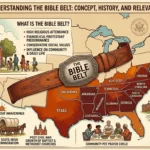
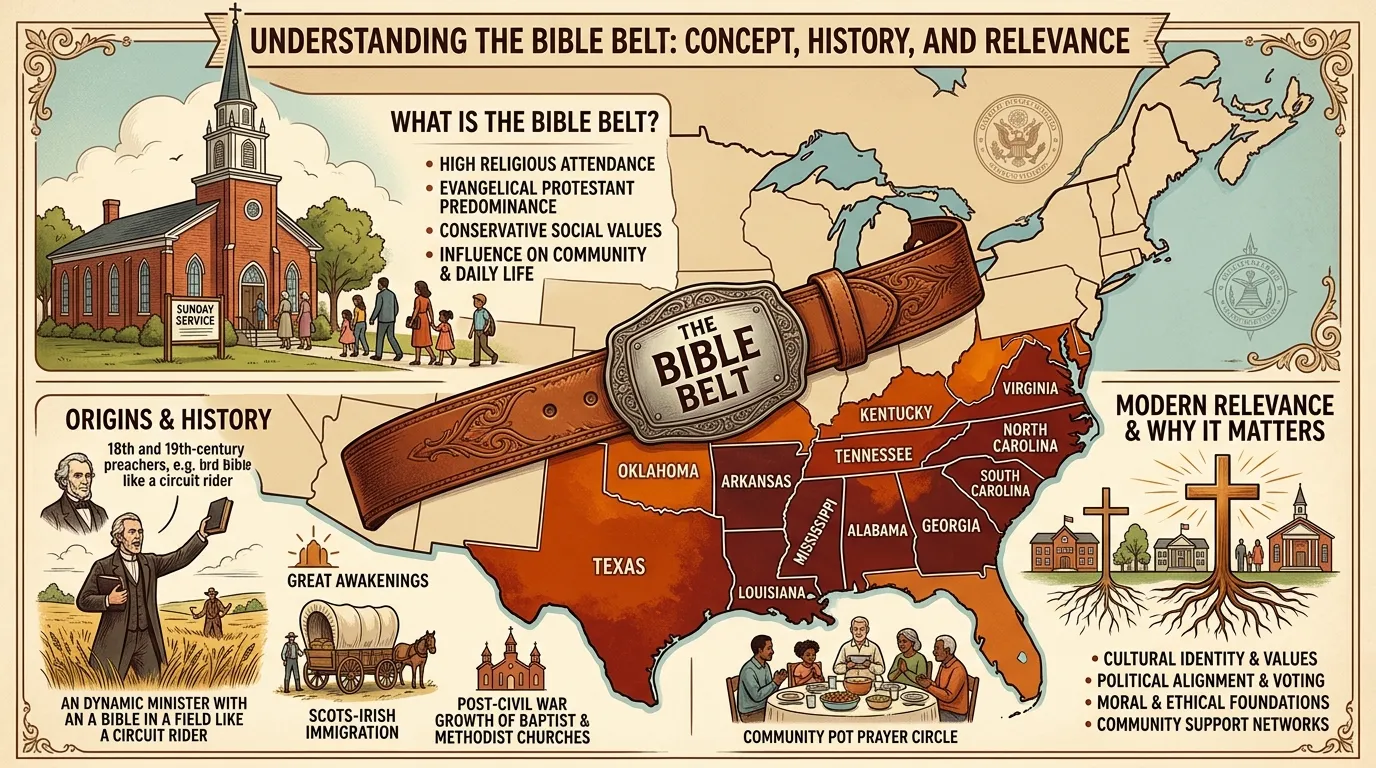
The Bible Belt is a nickname for a region of the United States where Christianity, especially Protestant Christianity, has traditionally played a major role in culture, family life, education, and community values.
The term generally refers to states in the Southeast and parts of the South, including places such as:
- Alabama
- Mississippi
- Georgia
- Tennessee
- Arkansas
- Kentucky
- Oklahoma
- South Carolina
- North Carolina
- Louisiana
- Texas (parts)
- Virginia (parts)
These areas are known for having:
- A high number of churches
- Regular church attendance
- Strong Christian traditions
- Community events centered around faith
- Widespread knowledge of the Bible
However, living in the Bible Belt does not automatically make someone a follower of Jesus. The Bible teaches that faith is personal and begins with a relationship with Christ.
Is the Bible Belt Mentioned in the Bible?
No.
The phrase Bible Belt does not appear anywhere in Scripture.
It is a modern expression created to describe a geographical region rather than a biblical concept. Because of this, we should avoid treating it as if it carries special spiritual authority.
Instead, the Bible focuses on something much more important:
God cares about the condition of the human heart, not the location where someone lives.
Jesus reminded His followers that true worship is not limited to one place. In John 4:23-24, He explained to the Samaritan woman that the Father seeks those who worship Him “in spirit and truth.” This shifted the focus from geography to genuine faith.
Where Did the Term Bible Belt Come From?
The phrase became popular in the early 1900s.
Journalist and social commentator H. L. Mencken is often credited with popularizing the term while describing regions where conservative Christianity strongly influenced public life.
Over time, the nickname became widely recognized across America.
Today, people use it to describe communities where Christian beliefs continue to shape:
- Family values
- Local traditions
- Politics
- Schools
- Community events
- Church involvement
Although the phrase has historical significance, it remains a cultural label rather than a biblical teaching.
What Does the Bible Teach About Genuine Faith?
The Bible consistently teaches that faith is not based on culture, traditions, or geography.
Instead, it begins with knowing Jesus Christ personally.
In Ephesians 2:8-9, Paul explains that salvation comes by God’s grace through faith—not by human effort or family background.
Likewise, Romans 10:9 teaches that salvation comes through believing in Christ and confessing Him as Lord.
These passages remind us that:
- Going to church is valuable.
- Growing up in a Christian family is a blessing.
- Living in a Christian community can be encouraging.
Yet none of these replace a personal relationship with Jesus.
The Spiritual Meaning Christians Often Associate With the Bible Belt
Although Scripture never defines a spiritual meaning for the Bible Belt, many Christians see it as a reminder of God’s influence within communities.
This should be understood as a common Christian reflection, not an explicit biblical teaching.
Some believers view the Bible Belt as representing:
A Heritage of Faith
Many families have passed biblical teaching from one generation to another.
This reflects the encouragement found in Deuteronomy 6:6-7, where God instructed Israel to teach His Word diligently to their children.
A Call to Live Out the Gospel
Being surrounded by churches also brings responsibility.
Jesus taught in Matthew 5:14-16 that His followers are the light of the world. Christians are called not only to know Scripture but also to demonstrate God’s love through their actions.
An Opportunity for Spiritual Growth
Communities rich in Christian fellowship often provide opportunities for:
- Bible study
- Worship
- Prayer
- Serving others
- Encouragement during difficult seasons
These blessings can strengthen faith when combined with sincere devotion to Christ.
Can Someone Live in the Bible Belt and Still Not Know God?
Yes.
This is one of the Bible’s most important lessons.
Religious surroundings alone cannot save anyone.
Jesus warned in Matthew 7:21-23 that not everyone who appears religious truly belongs to Him. His words remind believers that authentic faith is demonstrated through a genuine relationship with God.
Likewise, attending church every week does not replace:
- Repentance
- Faith in Jesus
- Obedience to God’s Word
- Love for God and others
Christianity is about transformation, not merely tradition.
Bible Belt Meaning in Dreams
Some people wonder whether dreaming about the Bible Belt carries a spiritual message.
The Bible shows that God occasionally spoke through dreams, such as those given to Joseph (Genesis 37) and Daniel (Daniel 7). However, these dreams had clear purposes and were confirmed by God’s revelation.
Today, Christians should be careful not to assume every dream comes from God.
If someone dreams about the Bible Belt, possible personal reflections might include:
- Thinking about their spiritual roots
- Feeling called to reconnect with church
- Remembering biblical values learned during childhood
- Reflecting on their walk with Christ
These are possible reflections rather than certain interpretations.
As 1 John 4:1 teaches, believers should “test the spirits” and evaluate spiritual experiences according to God’s Word.
Scripture—not dreams—is the final authority for Christian faith and practice.
Practical Lessons Christians Can Learn From the Bible Belt
Whether you live inside or outside the Bible Belt, God’s truth remains the same.
Here are several practical lessons.
Faith Must Be Personal
Your parents’ faith cannot replace your own relationship with Jesus.
Each believer is invited to trust Christ personally and follow Him daily.
God’s Word Should Shape Everyday Life
Reading the Bible is only the beginning.
James 1:22 encourages believers to become doers of the Word, not merely hearers.
That means showing:
- Kindness
- Forgiveness
- Integrity
- Compassion
- Humility
Christian Community Is a Blessing
Healthy churches encourage believers to grow together.
Hebrews 10:24-25 reminds Christians not to neglect gathering together but to encourage one another in faith.
Never Depend on Tradition Alone
Traditions can be meaningful, but they should always point us toward Christ.
True spiritual life comes from knowing God, not simply preserving religious customs.
Why the Bible Still Matters in Every Community
The Bible Belt reminds us that God’s Word has influenced countless families and communities throughout history.
Yet the message of Scripture reaches far beyond one region.
God’s invitation extends to every nation, language, and culture.
Jesus commanded His followers in Matthew 28:19-20 to make disciples of all nations, showing that the gospel belongs to the whole world.
Whether someone lives in the American South, Europe, Africa, Asia, or anywhere else, the same message remains:
Jesus Christ offers forgiveness, hope, and eternal life to everyone who believes in Him.
Frequently Asked Questions About Bible Belt Meaning
What is the Bible Belt?
The Bible Belt is a cultural term for regions of the United States where Christianity has traditionally had a strong influence on society, churches, and family life.
Is the Bible Belt a biblical term?
No. The phrase does not appear in the Bible. It is a modern nickname rather than a scriptural concept.
Why is it called the Bible Belt?
It was named because the Bible and Christian beliefs have historically played an important role in the culture of these regions.
Does living in the Bible Belt make someone a Christian?
No. The Bible teaches that becoming a Christian comes through personal faith in Jesus Christ, not through where someone lives.
What is the spiritual meaning of the Bible Belt?
Many Christians view it as a reminder of a strong heritage of faith and biblical values. However, this is a personal reflection rather than a doctrine taught directly in Scripture.
What should Christians remember about the Bible Belt?
The greatest lesson is that God desires transformed hearts more than religious traditions. Genuine faith comes from trusting Christ and living according to His Word.
Conclusion
The Bible Belt meaning is rooted in American history and culture rather than in the pages of Scripture. While the region is known for its strong Christian influence, the Bible reminds us that true faith is never determined by geography, family tradition, or church attendance alone. It begins with a personal relationship with Jesus Christ and grows through daily obedience to God’s Word.
If you have been thinking about the Bible Belt because of your background, a conversation, or even a dream, let it become an opportunity to draw closer to God. Read the Scriptures, pray for wisdom, and seek fellowship with believers who encourage you in truth. As you do, remember that God’s grace is available wherever you live. He welcomes all who come to Him in faith, offering hope, forgiveness, and the joy of walking with Him every day.