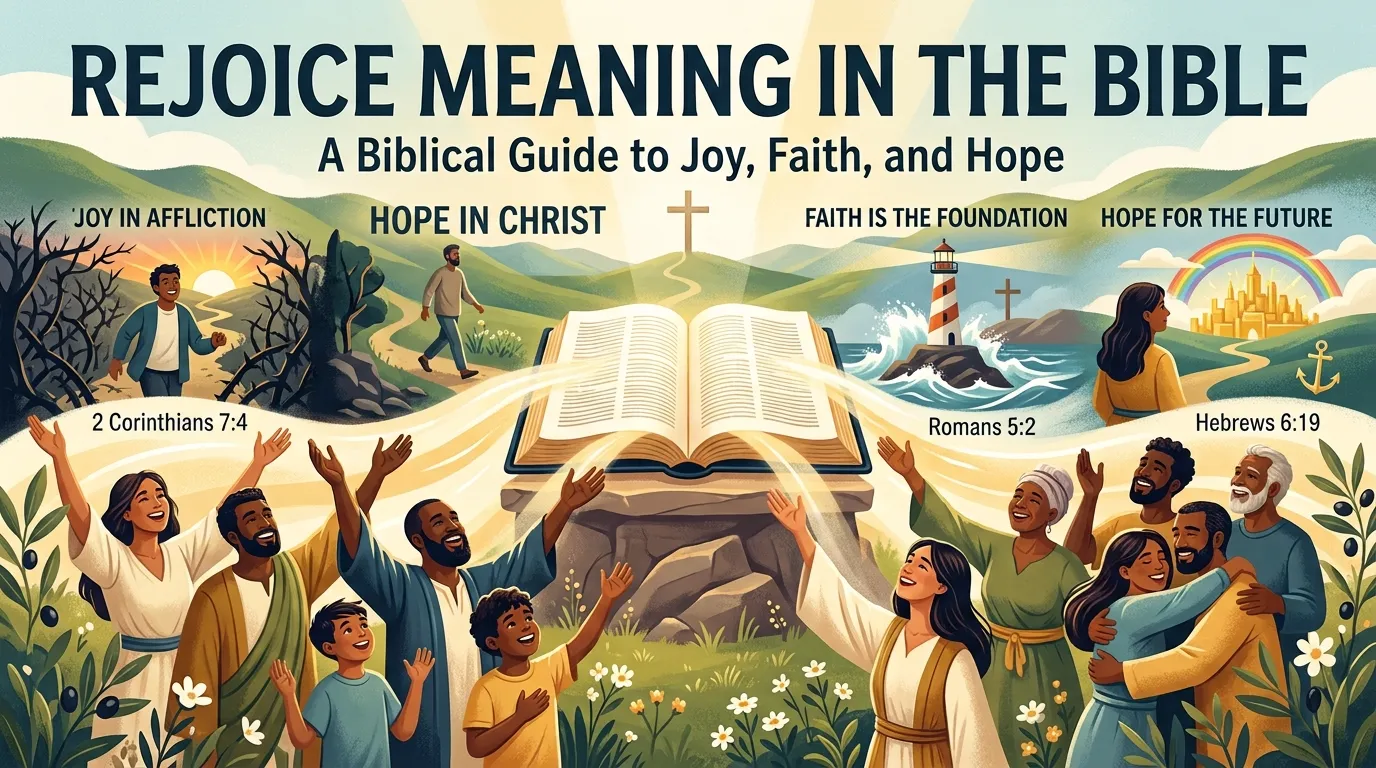
Life is full of moments that test our hearts. Some days bring celebration, while others bring disappointment, grief, or uncertainty. Yet throughout the Bible, God repeatedly calls His people to rejoice. At first, that may seem surprising. How can anyone rejoice during difficult seasons? Understanding the rejoice meaning in the Bible helps us see that biblical joy is much deeper than temporary happiness. It is rooted in God’s unchanging love, His promises, and His faithful presence.
The Bible teaches that rejoicing is not pretending everything is perfect. Instead, it is choosing to trust God even when life feels uncertain. This joyful confidence grows from knowing who God is rather than depending on changing circumstances. As we explore what Scripture says, you’ll discover how rejoicing strengthens faith, encourages hope, and helps believers walk closely with the Lord every day.
What Does Rejoice Mean in the Bible?
The rejoice meaning in the Bible goes beyond smiling or feeling excited. In Scripture, to rejoice means to express deep joy, delight, gladness, and praise because of God’s goodness, faithfulness, and salvation.
Biblical joy is often connected to worship. It is an inner confidence that God remains good, even during hardship.
In the Old Testament, several Hebrew words describe rejoicing. One common word is samach, which means to be glad, joyful, or cheerful. Another is gil, which describes joyful celebration and even joyful shouting because of God’s blessings.
In the New Testament, the Greek word chairō means to rejoice, be glad, or experience joy. It appears many times as believers are encouraged to find their joy in Christ.
The Bible teaches that rejoicing is a response to God’s character, not merely our circumstances.
Why Does the Bible Tell Us to Rejoice?
Throughout Scripture, God repeatedly invites His people to rejoice because joy strengthens faith and reminds believers of His constant presence.
God knows that life includes:
- Suffering
- Waiting
- Loss
- Uncertainty
- Temptation
- Spiritual battles
Instead of allowing fear to control our hearts, Scripture points us toward joyful trust.
Nehemiah encouraged God’s people after they returned from exile by saying:
“The joy of the Lord is your strength.” (Nehemiah 8:10)
This verse reminds believers that God’s joy gives spiritual strength during difficult seasons.
Rejoicing in the Old Testament
The Old Testament often connects rejoicing with God’s faithfulness and mighty works.
The Israelites rejoiced after God rescued them from Egypt. They celebrated His victories, His provision, and His covenant promises.
King David frequently wrote about rejoicing in the Psalms. Even while facing enemies and personal struggles, David chose to praise God.
Psalm 32 describes the joy of forgiven sin. Instead of hiding guilt, David celebrates God’s mercy and forgiveness.
Psalm 100 invites all people to:
“Serve the Lord with gladness.”
Here, rejoicing becomes an act of thankful worship rather than emotional excitement.
Rejoicing in the New Testament
The New Testament places even greater emphasis on rejoicing because of Jesus Christ.
When Jesus was born, the angels announced:
“Good news of great joy.”
This joy came because the Savior had entered the world.
Jesus also taught His followers that true joy comes from remaining close to Him.
In John 15, Jesus explains that abiding in His love leads to complete joy.
Later, after Jesus’ resurrection, His disciples rejoiced because death had been defeated and eternal hope had been secured.
Christian joy is rooted in the finished work of Christ.
Rejoice Always: What Does Philippians 4:4 Mean?
One of the Bible’s best-known verses says:
“Rejoice in the Lord always. Again I will say, rejoice!” (Philippians 4:4)
The Apostle Paul wrote these words while imprisoned.
His situation was difficult, yet his focus remained on Christ instead of his chains.
Paul was not saying believers should enjoy suffering. Rather, he taught that Christians can continue trusting God because His promises never fail.
This verse teaches an important truth:
Rejoicing is often a choice of faith before it becomes a feeling.
Biblical Joy Versus Worldly Happiness
Many people confuse happiness with biblical joy.
Although they can overlap, Scripture shows important differences.
| Biblical Joy | Worldly Happiness |
|---|---|
| Rooted in God | Rooted in circumstances |
| Lasts through trials | Changes quickly |
| Built on faith | Built on emotions |
| Produces peace | Often depends on success |
| Draws people closer to God | Can disappear when life changes |
The Bible encourages believers to seek lasting joy found in Christ rather than temporary pleasure.
What Does It Mean to Rejoice During Trials?
One of Scripture’s most challenging teachings is rejoicing during suffering.
James writes:
“Count it all joy… when you meet trials of various kinds.” (James 1:2)
James is not encouraging people to celebrate pain.
Instead, he explains that trials strengthen faith, build perseverance, and help believers mature spiritually.
Likewise, Romans 5 teaches that suffering can produce endurance, character, and hope because God’s love has been poured into believers through the Holy Spirit.
Biblical rejoicing acknowledges pain while continuing to trust God’s purpose.
The Spiritual Meaning of Rejoicing
Spiritually, rejoicing reflects a heart that trusts God’s goodness.
While the Bible clearly teaches believers to rejoice, Christians often understand rejoicing as evidence of a growing relationship with God. This is a thoughtful application of biblical teaching rather than a separate doctrine.
A joyful heart often reflects:
- Confidence in God’s promises
- Gratitude for salvation
- Peace during uncertainty
- Hope for eternal life
- Trust in God’s timing
- A heart of worship
These qualities grow as believers spend time with God through prayer, Scripture, and obedience.
Rejoice Meaning in Dreams
Some Christians wonder whether dreams about rejoicing carry spiritual meaning.
The Bible records occasions when God communicated through dreams, such as with Joseph (Genesis 37) and Joseph, the earthly father of Jesus (Matthew 1). However, Scripture never teaches that every dream comes from God.
If someone dreams about rejoicing, the dream should always be tested against biblical truth.
Sometimes a joyful dream may simply reflect:
- Gratitude
- Inner peace
- Hope
- Emotional healing
- Anticipation
Some believers may prayerfully see such dreams as reminders of God’s faithfulness if the message agrees with Scripture. However, Christians should avoid treating dreams as equal to God’s written Word.
The Bible remains the final authority for faith and guidance.
Everyday Ways Christians Can Rejoice
Rejoicing is not limited to church services or special celebrations.
Believers can practice biblical joy in ordinary life.
Thank God Every Day
Gratitude shifts our attention from problems to God’s blessings.
Even simple gifts remind us of His care.
Remember God’s Promises
Reading Scripture helps believers focus on eternal hope rather than temporary worries.
God’s promises remain true regardless of changing circumstances.
Worship Regularly
Singing, praying, and praising God help strengthen joyful faith.
Worship reminds us who God is.
Encourage Other Believers
Joy often grows when Christians support one another.
Kind words, prayer, and fellowship strengthen the church.
Trust God During Difficult Seasons
Choosing faith does not remove hardship.
Instead, it allows believers to experience God’s peace while waiting for His help.
Bible Verses About Rejoicing
Many passages encourage believers to rejoice.
Some of the most meaningful include:
- Philippians 4:4 — Rejoice in the Lord always.
- Nehemiah 8:10 — The joy of the Lord is your strength.
- Psalm 118:24 — Rejoice in the day the Lord has made.
- Romans 12:12 — Rejoice in hope and remain faithful in prayer.
- 1 Thessalonians 5:16–18 — Rejoice always, pray continually, and give thanks.
- John 15:11 — Jesus desires His followers to experience complete joy.
Together, these verses show that rejoicing is closely connected with worship, hope, prayer, and trust.
What Can Christians Learn From Rejoicing?
The rejoice meaning in the Bible offers practical lessons for everyday faith.
Believers learn that:
- Joy comes from God’s presence, not perfect circumstances.
- Faith grows stronger during trials.
- Gratitude changes our perspective.
- Jesus is the source of lasting joy.
- Hope remains even when life feels uncertain.
- God deserves praise in every season.
These lessons help Christians develop spiritual maturity and deeper trust in the Lord.
Frequently Asked Questions
Does rejoice simply mean to be happy?
No. Happiness often depends on circumstances, while biblical rejoicing is rooted in God’s unchanging character and promises. A believer can experience joy even while grieving or facing hardship.
Why did Paul tell believers to rejoice while suffering?
Paul had experienced prison, persecution, and many hardships. He knew that Christ’s presence and eternal hope were greater than temporary suffering, so he encouraged believers to fix their eyes on the Lord.
Is rejoicing a command in the Bible?
Yes. The Bible repeatedly commands believers to rejoice because joy reflects trust in God, gratitude for His grace, and confidence in His promises.
Can Christians rejoice while grieving?
Yes. Scripture shows that sorrow and joy can exist together. Christians grieve real losses, yet they also hold onto the hope found in God’s love and the resurrection of Jesus Christ (see 1 Thessalonians 4:13–14).
Does rejoicing mean ignoring problems?
No. The Bible never encourages pretending pain does not exist. Instead, believers are invited to bring their burdens to God while continuing to trust His faithfulness and care.
Conclusion
The rejoice meaning in the Bible is much richer than a passing emotion. It is a joyful response to God’s unchanging love, His saving grace through Jesus Christ, and His faithful presence in every season of life. Scripture calls believers to rejoice not because life is always easy, but because God is always good, wise, and trustworthy.
Whether you are celebrating a blessing or walking through a difficult chapter, remember that true joy is found in the Lord. Spend time in His Word, pray with an open heart, and thank Him for His faithfulness. As you continue to seek Him, ask God to fill your heart with the lasting joy that comes from His Spirit. May your life reflect the hope, peace, and confidence that only Christ can give, and may your rejoicing become a testimony of His grace to those around you.