Life can feel like a constant race. Many people wonder what it truly means to live a life that pleases God. Should success, wealth, or popularity be our goal? In the middle of these questions, Jesus gave one of the most powerful teachings in Scripture. The Beatitudes meaning in the Bible points us toward a different way of living—one marked by humility, mercy, faith, and trust in God rather than worldly success.
The Beatitudes are found at the beginning of Jesus’ famous Sermon on the Mount in Matthew 5:3–12. These short but powerful statements reveal what God’s kingdom values. They remind believers that true blessing is not always seen in comfort or riches but in a heart that belongs to God. As we explore the Beatitudes, we’ll look at what the Bible teaches, how Christians understand their spiritual meaning, and how these truths can shape everyday life.
What Are the Beatitudes in the Bible?
The word Beatitudes comes from a Latin word meaning blessings or happy state. In the Bible, the Beatitudes are eight (or nine, depending on how they are counted) blessings that Jesus spoke during the Sermon on the Mount.
Rather than giving a list of rules, Jesus described the character of people who belong to God’s kingdom. Each Beatitude begins with the phrase “Blessed are…”
In Scripture, being blessed means receiving God’s favor and living under His care. It does not always mean having an easy life. Instead, it points to a deep joy and hope that come from knowing God.
Where Are the Beatitudes Found?
The Beatitudes are recorded mainly in Matthew 5:3–12. A similar teaching also appears in Luke 6:20–23, often called the Sermon on the Plain.
In Matthew’s Gospel, Jesus had gathered many followers from different regions. As He sat on a mountainside, He began teaching His disciples and the crowds. His message challenged many common beliefs about success and greatness.
Instead of praising the rich, powerful, or famous, Jesus blessed the humble, the grieving, the merciful, and those who longed for righteousness.
The Beatitudes Meaning in the Bible
The Beatitudes reveal the heart of God’s kingdom. They describe the attitudes and character God desires in His people.
Here is a simple look at each blessing.
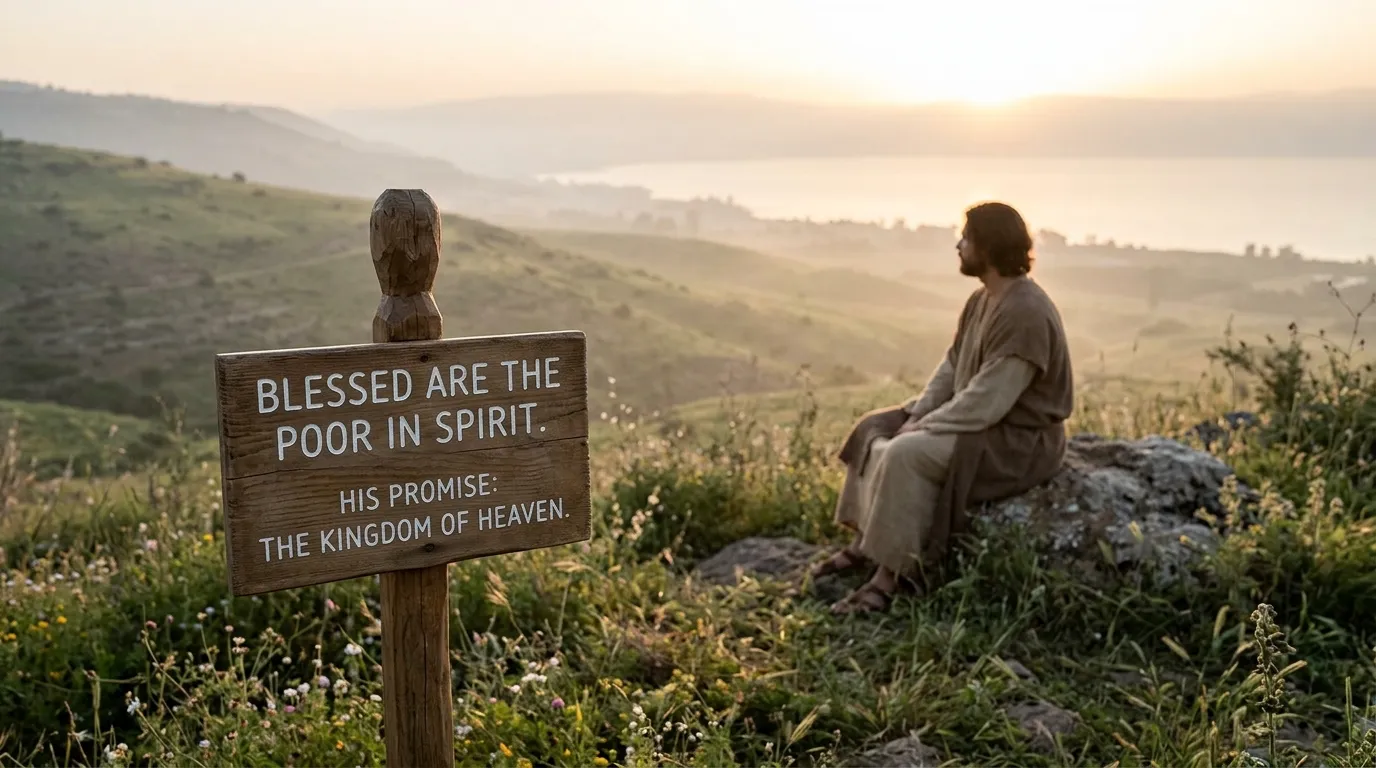
Blessed Are the Poor in Spirit
Jesus said, “Blessed are the poor in spirit, for theirs is the kingdom of heaven.” (Matthew 5:3)
Being poor in spirit does not mean lacking confidence. It means recognizing our spiritual need before God.
The Bible teaches that no one can save themselves. We all need God’s grace.
This attitude leads people to depend on Christ instead of trusting their own goodness.
Blessed Are Those Who Mourn
Jesus promised comfort to those who mourn.
This includes people grieving loss, but it also refers to sorrow over sin and the brokenness of the world.
God does not ignore our tears. Throughout Scripture, He is shown as a loving Father who comforts His people.
Blessed Are the Meek
Meekness is often misunderstood as weakness.
Biblically, meekness means strength under God’s control. Moses and Jesus both demonstrated humble strength while trusting God’s will.
Jesus promised that the meek will inherit the earth, showing that God’s kingdom rewards humility rather than pride.
Blessed Are Those Who Hunger and Thirst for Righteousness
This Beatitude speaks about longing to live God’s way.
Just as our bodies need food and water, our souls need God’s truth.
Jesus promised that those who seek righteousness will be filled because God satisfies hearts that seek Him.
Blessed Are the Merciful
Mercy is a major theme throughout the Bible.
People who have experienced God’s forgiveness are called to forgive others.
This does not mean ignoring justice. Instead, mercy reflects God’s compassionate heart while still honoring truth.
Blessed Are the Pure in Heart
A pure heart is sincere before God.
Rather than simply appearing religious, Jesus focused on inner transformation.
God cares about our hearts as much as our actions.
The promise that they will see God points to close fellowship with Him now and complete joy in His eternal kingdom.
Blessed Are the Peacemakers
Peacemakers work toward reconciliation.
Jesus calls believers to bring peace into families, churches, friendships, and communities whenever possible.
Romans 12 encourages Christians to live peacefully with others as far as it depends on them.
Blessed Are Those Who Are Persecuted for Righteousness
Following Jesus is not always easy.
Some believers experience rejection, ridicule, or even persecution because of their faith.
Jesus reminded His followers that God’s kingdom belongs to those who remain faithful despite suffering.
Why Did Jesus Teach the Beatitudes?
The Beatitudes introduce the entire Sermon on the Mount.
Jesus wanted His followers to understand that God’s kingdom is different from the world’s values.
People often admire:
- Wealth
- Power
- Popularity
- Status
- Success
Jesus emphasized:
- Humility
- Mercy
- Faithfulness
- Purity
- Peace
- Dependence on God
His message was not about earning salvation. Instead, it described the character that grows in people whose lives are being transformed by God’s grace.
Spiritual Meaning of the Beatitudes
Many Christians see the Beatitudes as a picture of spiritual growth.
While the Bible does not present them as a strict step-by-step process, believers often notice a meaningful progression.
For example:
- We first recognize our need for God.
- We grieve over sin.
- We become humble.
- We desire righteousness.
- We show mercy.
- Our hearts grow purer.
- We become peacemakers.
- We remain faithful during hardship.
This understanding is a common Christian interpretation rather than an explicit teaching of Scripture.
The central message remains clear:
God shapes His people to become more like Christ.
What Do the Beatitudes Teach Christians Today?
The Beatitudes remain practical for everyday life.
They influence how believers respond at home, at work, at church, and in their communities.
For example:
- A parent chooses patience instead of anger.
- A coworker forgives rather than holding a grudge.
- A student stands for honesty even when cheating seems easier.
- A church member serves quietly without seeking recognition.
- A believer trusts God during difficult seasons instead of losing hope.
These daily choices reflect the character Jesus described.
Beatitudes Meaning in Dreams
Some Christians wonder whether dreaming about the Beatitudes has spiritual meaning.
The Bible records occasions when God communicated through dreams, such as with Joseph in Genesis and Joseph, the earthly father of Jesus, in Matthew.
However, Scripture never teaches that every dream carries a divine message.
If someone dreams about the Beatitudes, they may prayerfully consider questions such as:
- Is God reminding me to seek humility?
- Am I showing mercy to others?
- Do I need to pursue peace?
- Is there an area where I need spiritual growth?
These reflections should always be tested against God’s Word.
The Bible—not personal dreams—is the believer’s final authority for faith and life.
Common Misunderstandings About the Beatitudes
Several misconceptions can confuse readers.
The Beatitudes Do Not Teach That Suffering Is Good
Jesus never celebrated pain itself.
Instead, He promised God’s comfort and future hope for those who suffer while trusting Him.
The Beatitudes Do Not Promise Instant Earthly Success
God’s blessings are often spiritual and eternal.
Faithfulness does not guarantee wealth, popularity, or an easy life.
The Beatitudes Are Not a Way to Earn Salvation
Salvation comes through faith in Jesus Christ.
The Beatitudes describe the fruit of a transformed heart rather than a checklist for earning God’s acceptance.
Bible Verses That Support the Message of the Beatitudes
Many other passages echo the same themes.
- Micah 6:8 calls God’s people to act justly, love mercy, and walk humbly with Him.
- James 4:6 teaches that God gives grace to the humble.
- Philippians 2:3–8 points to Jesus as the perfect example of humility.
- Romans 12 encourages believers to live peacefully and overcome evil with good.
- Galatians 5:22–23 describes the fruit of the Spirit, which reflects many Beatitude qualities.
Together, these passages show that humility, mercy, and love are woven throughout Scripture.
Practical Ways to Live Out the Beatitudes
Growing in Christ happens one step at a time.
Here are practical ways to apply these teachings:
- Pray for a humble heart each day.
- Read God’s Word consistently.
- Forgive people who have hurt you.
- Show kindness to someone who cannot repay you.
- Choose peace instead of unnecessary arguments.
- Help those who are hurting.
- Stand firm in your faith with gentleness and courage.
- Trust God’s promises during difficult seasons.
These habits do not make us perfect, but they help us grow closer to Christ.
Frequently Asked Questions
What is the main message of the Beatitudes?
The Beatitudes reveal the character of people who belong to God’s kingdom. They teach humility, mercy, righteousness, peace, and faithful trust in God.
Why are the Beatitudes important?
They help believers understand what Jesus values and how Christians are called to live as His followers.
How many Beatitudes are there?
Most Christians count eight Beatitudes in Matthew 5:3–10, while others include verse 11–12 as a ninth blessing because Jesus expands on persecution.
Are the Beatitudes only for the disciples?
Jesus spoke directly to His disciples while the crowds listened. Today, Christians understand these teachings as applying to all followers of Christ.
Do the Beatitudes guarantee a trouble-free life?
No. Jesus actually warned that faithful believers may face hardship. At the same time, He promised God’s presence, comfort, and eternal reward.
Conclusion
The Beatitudes meaning in the Bible goes far beyond a list of inspiring sayings. They reveal the heart of Jesus and the values of God’s kingdom. Instead of chasing pride, power, or popularity, Christ calls His followers to embrace humility, mercy, purity, righteousness, peace, and faithful endurance. These qualities are not produced by human effort alone but by God’s transforming grace at work in our lives.
As you read the Beatitudes, ask the Lord to shape your heart to reflect His character. Spend time in prayer, study the Scriptures, and invite the Holy Spirit to help you grow in these beautiful qualities. Even when life is difficult, remember that God blesses those who trust Him, and His promises are sure. May the Beatitudes encourage you to walk closely with Christ each day, resting in His grace and sharing His love with the world.