Have you ever caught yourself thinking about something you knew wasn’t honoring God? Maybe it was a passing thought, a strong temptation, or a desire that seemed difficult to control. Every Christian faces moments like these. The good news is that God does not leave us without hope or direction. Understanding the lust meaning in the Bible helps us recognize temptation, seek God’s wisdom, and walk in freedom instead of shame.
The Bible speaks honestly about lust because God cares deeply about our hearts. Rather than simply giving rules, Scripture reveals why lust is dangerous, how it affects our relationship with God and others, and how His grace offers a better way. Let’s explore what the Bible teaches and discover practical encouragement for everyday Christian living.
What Is the Lust Meaning in the Bible?
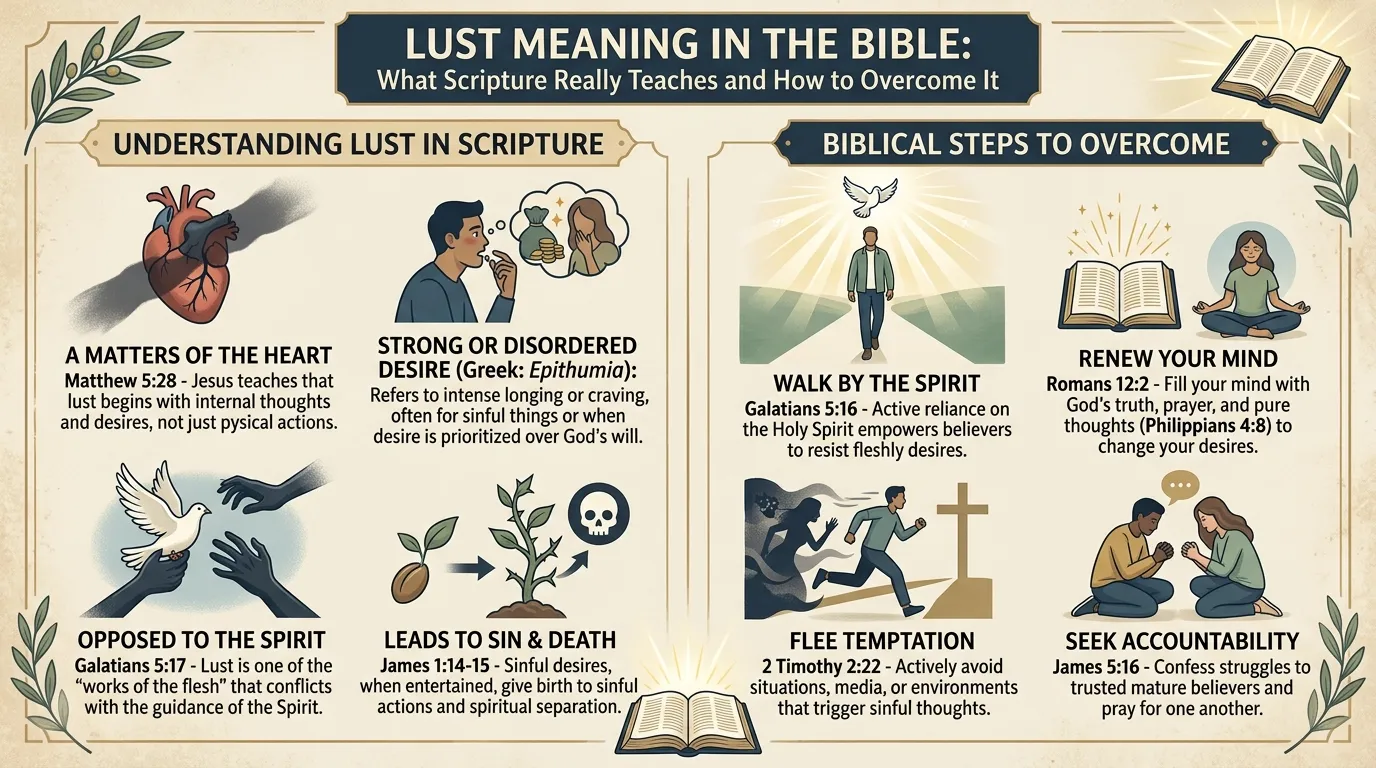
In the Bible, lust is a strong sinful desire that seeks selfish satisfaction outside of God’s will. Although many people connect lust only with sexual sin, Scripture uses the idea more broadly.
Lust can include:
- Sexual desire directed outside God’s design for marriage.
- Greed for money or possessions.
- Craving power, status, or control.
- Any sinful desire that becomes stronger than our desire to obey God.
The Bible does not teach that every desire is sinful. God created human desires for love, marriage, food, work, and joy. Lust begins when those desires become uncontrolled or pursue what God has forbidden.
How Does the Bible Define Lust?
Jesus gave one of the clearest teachings about lust during the Sermon on the Mount.
In Matthew 5:27–28, Jesus explained that adultery begins in the heart. He said that looking at someone with lustful intent is already a form of adultery in the heart. His point was not merely about outward actions but about the condition of our inner life.
This teaching reminds Christians that:
- God sees both actions and motives.
- Sin often starts with unchecked thoughts.
- Heart transformation matters just as much as outward behavior.
God desires purity that begins inside, not merely good appearances.
Lust in the Old and New Testaments
Throughout Scripture, God consistently warns against sinful desires.
Lust in the Old Testament
The Old Testament repeatedly shows how unchecked desire leads to destruction.
For example:
- David and Bathsheba (2 Samuel 11) demonstrates how lust led David into adultery, deception, and murder. Although David later repented, his choices had lasting consequences.
- The Tenth Commandment (Exodus 20:17) warns against coveting what belongs to others. This command reaches beyond actions to the desires of the heart.
These stories reveal that sinful desires rarely remain hidden. They often grow into actions that hurt ourselves and others.
Lust in the New Testament
The New Testament continues this teaching while emphasizing the transforming work of Christ.
James explains in James 1:14–15 that temptation begins when people are drawn away by their own desires. If those desires continue unchecked, they give birth to sin, and sin ultimately leads to death.
Instead of leaving believers discouraged, the New Testament points them toward the Holy Spirit, who gives strength to resist temptation and grow in holiness.
Is Lust the Same as Sexual Attraction?
One of the most common questions Christians ask is whether attraction itself is sinful.
The Bible makes an important distinction.
Feeling attracted to another person is part of God’s design. Scripture celebrates love and marriage, especially in books like Song of Solomon. However, lust involves choosing to entertain sinful thoughts or desires that dishonor God or another person.
In simple terms:
- Attraction notices beauty.
- Lust seeks selfish pleasure.
- Love honors, protects, and respects others.
Understanding this difference helps believers avoid unnecessary guilt while remaining watchful over their hearts.
Why Does God Warn Against Lust?
God’s commands always flow from His love and wisdom.
He warns against lust because it can:
- Damage relationships.
- Lead people away from God’s purpose.
- Encourage selfishness instead of love.
- Distort the value and dignity of others.
- Create guilt, shame, and spiritual distance.
God’s desire is not to take away joy but to protect His children from the painful consequences of sin.
His commands are invitations into freedom, not burdens meant to steal happiness.
What Does Lust Reveal About the Human Heart?
Jesus often focused on the heart because outward behavior begins inside.
When lust takes root, it may reveal:
- Dissatisfaction with God.
- Uncontrolled desires.
- Emotional emptiness.
- Pride or selfishness.
- A need for deeper spiritual growth.
Instead of only trying to manage behavior, Scripture encourages believers to allow God to transform their hearts.
According to Ezekiel 36:26, God promises to give His people a new heart and a new spirit. This reminds Christians that lasting change comes through God’s work within us.
Biblical Examples That Teach About Lust
The Bible includes real people whose lives offer important lessons.
David and Bathsheba
David’s story reminds believers that even faithful followers of God can fall into temptation when they stop guarding their hearts.
His sincere repentance in Psalm 51 also demonstrates God’s willingness to forgive those who genuinely turn back to Him.
Joseph and Potiphar’s Wife
In Genesis 39, Joseph faced sexual temptation but chose to flee instead of compromise.
His example teaches that sometimes the wisest spiritual decision is simply to walk away from temptation rather than trying to prove our strength.
Samson
Samson repeatedly allowed uncontrolled desires to influence his decisions. His life illustrates how ignoring God’s wisdom can weaken spiritual strength over time.
Can Christians Overcome Lust?
Absolutely.
The Bible never says temptation disappears completely, but it clearly teaches that believers are not powerless.
According to 1 Corinthians 10:13, God is faithful and always provides a way to endure or escape temptation.
Victory usually comes through daily dependence on Christ rather than human willpower.
Some practical biblical habits include:
- Pray honestly every day.
- Read God’s Word consistently.
- Avoid situations that encourage temptation.
- Stay connected with mature Christian believers.
- Fill your mind with things that honor God.
- Remember God’s grace when you fail.
Freedom is often a journey of faithful growth, not instant perfection.
Does the Bible Say Lust Can Be Forgiven?
Yes.
One of the greatest messages of Christianity is forgiveness through Jesus Christ.
The Apostle John writes in 1 John 1:9 that if we confess our sins, God is faithful and just to forgive us and cleanse us from all unrighteousness.
This promise includes sexual sin, lust, and every other sin confessed with genuine repentance.
God does not define believers by their past failures. Through Christ, He offers forgiveness, restoration, and a new beginning.
Spiritual Meaning of Lust in Christian Life
Beyond its literal meaning, many Christians understand lust as a picture of any desire that competes with wholehearted devotion to God.
This interpretation is based on broader biblical themes rather than a single verse.
Spiritually, lust reminds believers to examine questions like:
- What controls my heart?
- What receives more attention than God?
- Am I seeking satisfaction in temporary things instead of Christ?
These reflections can help Christians grow closer to God while remaining rooted in biblical truth.
What About Dreams Involving Lust?
Many people search for the biblical meaning of dreams involving lust or sexual temptation.
The Bible records that God sometimes used dreams for specific purposes, such as with Joseph, Daniel, and Joseph, the earthly father of Jesus. However, Scripture never teaches that every dream carries a divine message.
Dreams involving lust may simply reflect:
- Daily thoughts.
- Emotional struggles.
- Stress.
- Personal temptations.
- Random brain activity during sleep.
Some Christians believe dreams can occasionally encourage spiritual reflection. Even so, every dream should always be tested against Scripture rather than treated as direct revelation.
If a dream encourages fear, sin, or teachings that contradict God’s Word, it should not be accepted as a message from God.
Practical Lessons Christians Can Learn
Every believer can apply biblical wisdom about lust in daily life.
Guard Your Mind
What we watch, read, and think about shapes our hearts over time.
Philippians 4:8 encourages believers to focus on what is true, honorable, pure, lovely, and worthy of praise.
Stay Close to God
Prayer, worship, Bible study, and Christian fellowship strengthen believers against temptation.
A growing relationship with Christ changes desires from the inside out.
Choose Accountability
Trusted Christian friends, pastors, or mentors can provide encouragement, wisdom, and prayer during difficult seasons.
Remember God’s Grace
Failure is never the end of the story.
When believers repent sincerely, God welcomes them with mercy and continues His work of transformation.
Frequently Asked Questions About Lust Meaning in the Bible
Is lust always sexual in the Bible?
No. While lust often refers to sinful sexual desire, Scripture also describes sinful cravings for wealth, power, possessions, and other selfish ambitions.
Is temptation itself a sin?
No. Jesus Himself was tempted (Matthew 4), yet He never sinned. Temptation becomes sin when we willingly embrace or act on sinful desires.
Can God forgive repeated struggles with lust?
Yes. God calls believers to continual repentance, faith, and growth. His forgiveness remains available to those who sincerely confess their sins and trust in Christ.
How can I resist lust according to the Bible?
The Bible encourages prayer, Scripture reading, accountability, avoiding temptation, depending on the Holy Spirit, and remembering God’s promises.
Does every lustful dream have spiritual meaning?
Not necessarily. Dreams can have many causes. Christians should avoid assuming every dream is a message from God and instead evaluate everything according to Scripture.
Conclusion
The lust meaning in the Bible reaches far beyond outward actions. Scripture teaches that God cares deeply about the heart because our thoughts and desires shape the way we live. While lust can lead people away from God’s best, the message of the Bible is ultimately one of hope rather than condemnation.
God offers forgiveness through Jesus Christ, strength through the Holy Spirit, and wisdom through His Word. No matter where you are in your spiritual journey, His grace is greater than your struggles. As you seek Him in prayer, study Scripture, and trust His guidance, He can renew your heart and help you grow in purity, love, and faithfulness.
If you are battling temptation today, remember that you do not have to fight alone. Bring your heart honestly before God, receive His mercy, and ask Him to shape your desires according to His perfect will. His love is constant, His grace is sufficient, and His power is able to transform every willing heart.