Have you ever worked hard for something only to realize later that it did not truly satisfy you? Maybe it was fame, success, possessions, or the approval of others. The Bible often uses the word vain to describe things that are empty, temporary, or lacking lasting value.
The vain meaning in the Bible goes beyond simple pride or self-focus. It refers to anything that is meaningless, useless, or disconnected from God’s purpose. Scripture warns believers not to spend their lives chasing things that cannot satisfy the soul.
Imagine trying to catch the wind with your hands. No matter how hard you try, you cannot hold it. This image is similar to how the Bible describes many earthly pursuits when they are placed above God. They may seem important for a moment, but they quickly fade away.
Many Christians search for the biblical meaning, Christian significance, and spiritual symbolism of vain because the word appears throughout Scripture. Understanding its meaning helps believers focus on what truly matters and avoid wasting their lives on temporary things.
As we explore the meaning of vain in the Bible, we will discover important lessons about humility, purpose, faith, and living for God.
What Does Vain Mean in the Bible?
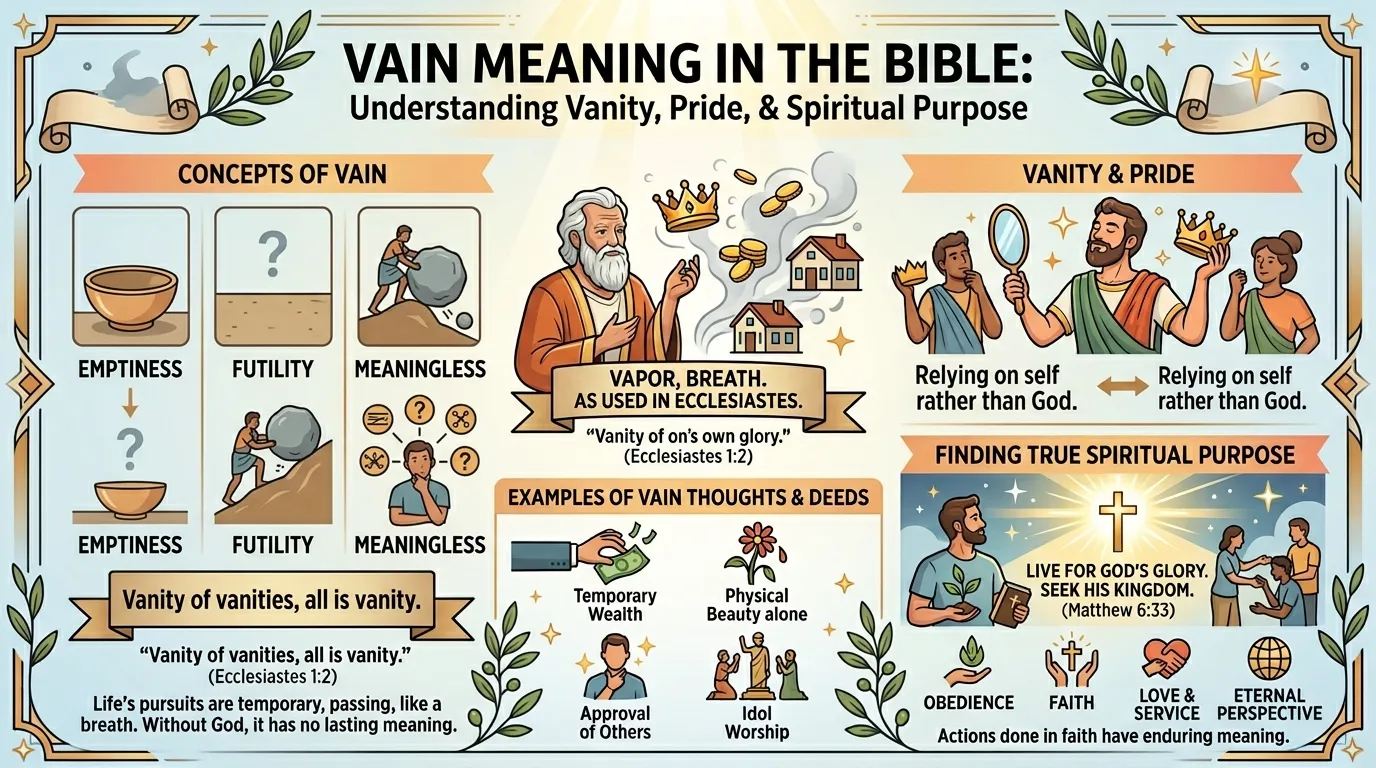
In the Bible, the word vain often means:
- Empty
- Meaningless
- Worthless
- Prideful
- Without lasting purpose
Depending on the context, vain can describe:
- Empty words
- False worship
- Pride
- Human efforts without God
- Temporary worldly pursuits
Something that is vain lacks eternal value when separated from God’s purpose.
The Biblical Meaning of Vanity
The word vanity is closely related to vain.
One of the most famous verses appears in Ecclesiastes.
“Vanity of vanities, says the Preacher; vanity of vanities, all is vanity.” — Ecclesiastes 1:2
In this passage, King Solomon reflects on life and recognizes that earthly achievements alone cannot provide lasting fulfillment.
Without God, even wealth, success, and pleasure can feel empty.
True meaning is found in a relationship with God, not temporary achievements.
Vain as Empty Effort
The Bible sometimes uses vain to describe efforts made without God’s blessing.
“Unless the Lord builds the house, the builders labor in vain.” — Psalm 127:1
This verse teaches that human effort alone is not enough.
People can work hard, make plans, and pursue goals, but lasting success comes from God’s guidance.
Life becomes meaningful when God is at the center of our work and decisions.
Vain Worship in the Bible
Jesus warned about worship that appears spiritual on the outside but lacks genuine devotion.
“They worship me in vain; their teachings are merely human rules.” — Matthew 15:9
This type of vain worship occurs when people follow religious actions without truly loving or obeying God.
God desires sincere faith rather than empty rituals.
True worship comes from a heart devoted to God.
The Spiritual Meaning of Vain
The spiritual significance of vain includes several important lessons.
Pride
Trusting in oneself instead of God.
Emptiness
Seeking fulfillment in temporary things.
Self-Reliance
Ignoring God’s guidance and wisdom.
False Priorities
Putting worldly pursuits above spiritual growth.
Lack of Eternal Focus
Living only for present rewards.
The Bible warns against anything that distracts us from God’s purpose.
Biblical Symbolism of Vanity
The biblical symbolism of vanity often includes:
Vapor
Something that appears briefly and disappears.
Wind
Something difficult or impossible to hold.
Shadows
Temporary and passing realities.
Empty Containers
Things that appear full but lack substance.
These symbols remind believers that earthly things are temporary compared to God’s eternal truth.
What Does God Say About Pride and Vanity?
The Bible repeatedly warns against pride.
“God opposes the proud but shows favor to the humble.” — James 4:6
Pride can lead people away from God because it causes them to rely on themselves rather than Him.
Humility, on the other hand, draws believers closer to God’s grace and wisdom.
Humility opens the door to spiritual growth and God’s blessing.
Vain Words and Speech
Scripture also speaks about using words in vain.
One example is found in the commandment regarding God’s name.
“You shall not take the name of the Lord your God in vain.” — Exodus 20:7
This means treating God’s name carelessly, disrespectfully, or without honor.
Believers are called to speak with sincerity and respect.
Words should reflect truth, kindness, and reverence for God.
Vain Pursuits and Worldly Success
The Bible does not teach that success or possessions are wrong.
However, it warns against making them the center of life.
Jesus said:
“What good will it be for someone to gain the whole world, yet forfeit their soul?” — Matthew 16:26
This verse reminds believers that spiritual priorities are more important than temporary achievements.
Earthly success is temporary, but God’s kingdom is eternal.
Vain in Christian Life Today
Modern believers can encounter vanity in many forms:
- Seeking constant approval from others
- Chasing wealth without purpose
- Living for status and recognition
- Neglecting spiritual growth
- Trusting personal strength more than God
The Bible encourages Christians to focus on eternal values rather than temporary rewards.
Practical Lessons From the Meaning of Vain
Here are simple lessons believers can apply:
- Put God first in all things.
- Seek eternal treasures rather than temporary success.
- Practice humility.
- Worship sincerely.
- Trust God’s guidance.
- Focus on spiritual growth.
A life centered on God will never be lived in vain.
Vain in Dreams and Spiritual Reflection
If someone reflects on the word vain during prayer, Bible study, or a dream, it may serve as a reminder to examine their priorities.
It can encourage believers to ask:
- Am I seeking God’s will?
- Have I become too focused on worldly things?
- Is my faith genuine and sincere?
- Am I trusting God fully?
These questions can lead to spiritual renewal and deeper faith.
Conclusion
The vain meaning in the Bible refers to things that are empty, temporary, or lacking lasting value apart from God. Scripture warns against pride, empty worship, and pursuing worldly success while neglecting spiritual priorities.
At the same time, the Bible offers hope by showing that true meaning, purpose, and fulfillment are found in God alone. When believers trust Him, serve Him, and seek His kingdom first, their lives gain eternal significance.
Remember this encouraging truth:
A life devoted to God is never empty or meaningless because His purposes last forever.