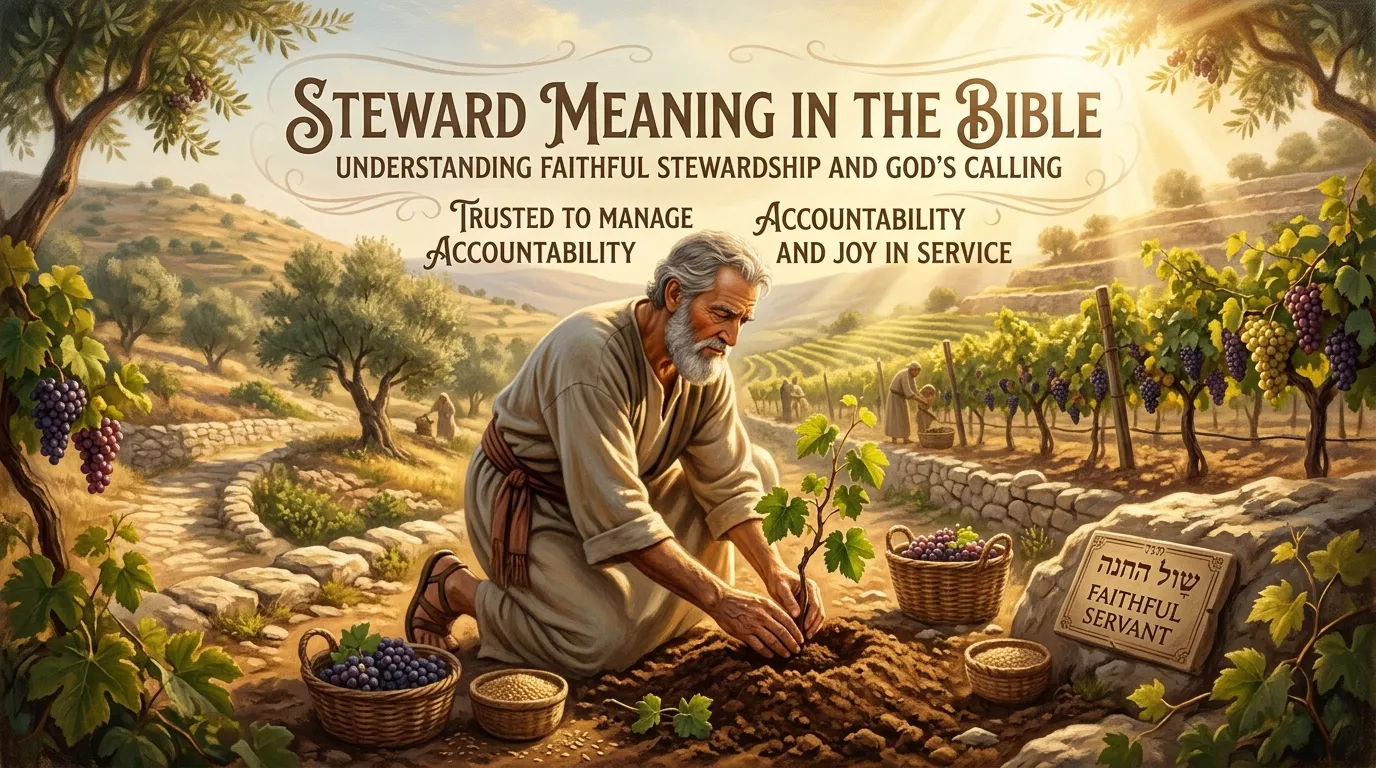
Have you ever been trusted to take care of something valuable that belonged to someone else? Perhaps it was a family treasure, an important responsibility, or even a pet. Being trusted with something valuable requires care, honesty, and responsibility. This idea helps us understand the steward meaning in the Bible.
In Scripture, a steward is a person who manages or takes care of something on behalf of another. The Bible teaches that God is the true owner of everything, and believers are called to be faithful stewards of the blessings, resources, talents, and opportunities He gives them.
Imagine a gardener caring for a beautiful garden owned by someone else. The gardener does not own the garden, but he is responsible for protecting and nurturing it. In the same way, Christians are entrusted with many gifts from God and are called to use them wisely.
Many believers search for the biblical meaning, Christian significance, and spiritual symbolism of stewardship because it is an important part of living a faithful life. Stewardship is not only about money—it includes time, abilities, relationships, and even the care of God’s creation.
As we explore the meaning of steward in the Bible, we will discover how faithful stewardship honors God and helps believers fulfill their purpose.
What Does Steward Mean in the Bible?
In the Bible, a steward is someone who manages or oversees property, resources, or responsibilities that belong to another person.
A steward is expected to be:
- Faithful
- Trustworthy
- Responsible
- Wise
- Obedient
The steward does not own what he manages.
Instead, he cares for it on behalf of the owner.
Biblical stewardship is about faithfully managing what God has entrusted to us.
The Biblical Meaning of Stewardship
Stewardship is the practice of caring for God’s gifts and using them according to His will.
The Bible teaches that everything belongs to God.
“The earth is the Lord’s, and everything in it.” — Psalm 24:1
Because God owns everything, believers are called to manage His blessings responsibly.
This includes:
- Time
- Money
- Talents
- Relationships
- Opportunities
- Creation
Stewardship recognizes that God is the owner and we are His caretakers.
Examples of Stewards in the Bible
The Bible contains several examples of stewardship.
Joseph in Egypt
Joseph was entrusted with managing Pharaoh’s household and later the resources of Egypt.
His wisdom and faithfulness made him a successful steward.
The Parable of the Talents
Jesus told a story about servants who were entrusted with money by their master.
Those who used their resources wisely were rewarded.
“Well done, good and faithful servant.” — Matthew 25:21
This parable highlights the importance of faithful stewardship.
Church Leaders
The New Testament describes leaders as stewards of God’s truth and ministry.
The Spiritual Meaning of Stewardship
The spiritual significance of stewardship goes beyond managing possessions.
Faithfulness
God desires trustworthy servants.
Responsibility
Believers are accountable for how they use God’s gifts.
Service
Stewardship involves serving others.
Gratitude
Recognizing every blessing comes from God.
Obedience
Using resources according to God’s purposes.
Faithful stewardship reflects a heart devoted to God.
Biblical Symbolism of a Steward
The biblical symbolism of a steward includes several important themes.
Trust
God entrusts believers with responsibilities.
Accountability
One day believers will answer to God for their actions.
Service
Stewards serve the owner’s interests.
Wisdom
Good stewardship requires wise decisions.
Faithfulness
Consistency and reliability honor God.
These themes appear throughout Scripture.
God as the True Owner
A key lesson of biblical stewardship is understanding ownership.
The Bible teaches that:
- God created everything.
- God provides every blessing.
- God owns all things.
Believers are caretakers, not owners.
This truth changes how Christians view money, possessions, and opportunities.
Everything we have ultimately belongs to God.
Stewardship of Time
Time is one of God’s most valuable gifts.
Every person receives the same number of hours each day.
The Bible encourages believers to use their time wisely.
“Be very careful, then, how you live… making the most of every opportunity.” — Ephesians 5:15-16
Good stewardship includes:
- Spending time with God
- Serving others
- Growing spiritually
- Using time wisely
Stewardship of Talents and Gifts
God gives each person unique abilities and talents.
Some people teach.
Others encourage, lead, create, or serve.
These gifts are meant to glorify God and help others.
“Each of you should use whatever gift you have received to serve others.” — 1 Peter 4:10
God’s gifts are given to be used, not hidden.
Stewardship of Money and Resources
One of the most common topics related to stewardship is finances.
The Bible encourages believers to:
- Give generously
- Spend wisely
- Avoid greed
- Help those in need
- Trust God as provider
Money itself is not evil, but believers are called to manage it faithfully.
Good stewardship reflects trust in God rather than dependence on wealth.
Stewardship and Christian Life Today
Stewardship remains an important part of Christian living.
Believers can practice stewardship by:
- Caring for family relationships
- Serving in church
- Managing finances responsibly
- Using talents for God’s glory
- Caring for the environment
- Sharing the Gospel
Every area of life can become an opportunity to honor God.
Practical Lessons From the Meaning of Steward
Here are simple lessons believers can apply:
- Remember that everything belongs to God.
- Use your time wisely.
- Serve others faithfully.
- Manage resources responsibly.
- Be grateful for God’s blessings.
- Use your gifts to glorify God.
Faithful stewardship turns everyday responsibilities into acts of worship.
Conclusion
The steward meaning in the Bible refers to someone who faithfully manages what belongs to another. Spiritually, believers are called to be stewards of God’s gifts, resources, opportunities, and blessings.
Throughout Scripture, stewardship is connected to faithfulness, responsibility, wisdom, and service. God entrusts His people with many gifts and calls them to use those gifts for His glory and the benefit of others.
Remember this encouraging truth:
Everything you have is a gift from God, and faithful stewardship is one of the most meaningful ways to honor Him and fulfill His purpose for your life.