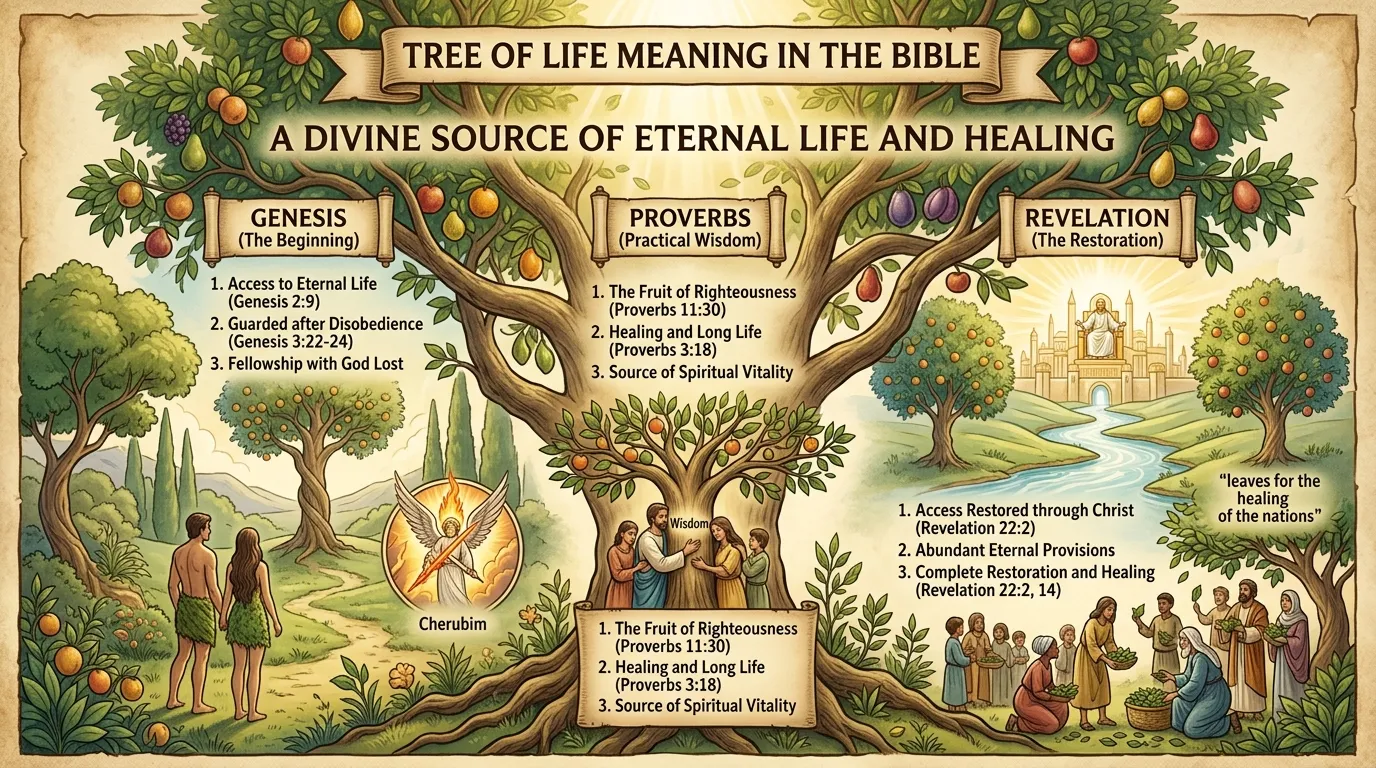
Few symbols in the Bible are as powerful and mysterious as the Tree of Life. Appearing at the beginning of Scripture in the Garden of Eden and again at the end of the Bible in the New Jerusalem, the Tree of Life represents God’s gift of eternal life, His presence, and His plan of redemption for humanity.
The Tree of Life meaning in the Bible goes far beyond a physical tree. It symbolizes life, blessing, wisdom, healing, and the eternal relationship God desires with His people. From Genesis to Revelation, the Tree of Life serves as a reminder that God is the source of all life and that His ultimate purpose is to restore humanity to fellowship with Him.
Imagine a tree that never withers, continually providing life, nourishment, and healing. This image helps us understand why the Tree of Life has become one of the most cherished symbols in Christian faith.
Many believers search for the biblical meaning, Christian significance, and spiritual symbolism of the Tree of Life because it connects the story of creation, the fall of humanity, and God’s plan of salvation through Jesus Christ.
As we explore the meaning of the Tree of Life, we will discover how it points to God’s love, eternal life, and the hope found in Christ.
What Is the Tree of Life?
The Tree of Life first appears in the Garden of Eden.
“The Lord God made all kinds of trees grow out of the ground—trees that were pleasing to the eye and good for food. In the middle of the garden were the Tree of Life and the tree of the knowledge of good and evil.” — Genesis 2:9
God placed the Tree of Life in the center of the garden.
It represented ongoing life and fellowship with God.
As long as humanity remained in perfect relationship with Him, access to the Tree of Life remained available.
The Tree of Life symbolizes God’s gift of life and His presence among His people.
The Tree of Life in the Garden of Eden
The Tree of Life played an important role in the story of creation.
Adam and Eve lived in perfect harmony with God until they disobeyed His command.
After sin entered the world, God prevented them from accessing the Tree of Life.
“He drove the man out… to guard the way to the Tree of Life.” — Genesis 3:24
This action demonstrated that sin had broken humanity’s relationship with God.
The loss of access to the Tree of Life symbolized separation from eternal life.
The Spiritual Meaning of the Tree of Life
The spiritual significance of the Tree of Life includes several important themes.
Eternal Life
The Tree of Life represents everlasting life with God.
God’s Presence
It symbolizes close fellowship with the Creator.
Blessing
The tree reflects God’s goodness and provision.
Restoration
It points toward God’s plan to redeem humanity.
Hope
The Tree of Life reminds believers of God’s future promises.
The Tree of Life ultimately points to the life that God offers through Jesus Christ.
Tree of Life as a Symbol of Wisdom
The Bible also uses the phrase “tree of life” symbolically.
For example:
“Wisdom is a tree of life to those who embrace her.” — Proverbs 3:18
In this verse, wisdom is compared to a Tree of Life because it brings blessing, growth, and spiritual flourishing.
Other passages connect the Tree of Life with:
- Righteous living
- Hope fulfilled
- Encouraging words
- Godly wisdom
These references show that God’s truth leads to life and blessing.
The Tree of Life and Jesus Christ
Many Christians see the Tree of Life as a symbol that points to Jesus.
Jesus declared:
“I am the way and the truth and the life.” — John 14:6
Through His death and resurrection, Jesus made eternal life available to all who believe in Him.
The separation caused by sin can be restored through faith in Christ.
Because of Jesus, believers receive the promise of eternal life and renewed fellowship with God.
Jesus is the fulfillment of the hope represented by the Tree of Life.
The Tree of Life in Revelation
The Tree of Life appears again in the final book of the Bible.
“On each side of the river stood the Tree of Life, bearing twelve crops of fruit… And the leaves of the tree are for the healing of the nations.” — Revelation 22:2
This beautiful picture shows God’s completed plan of redemption.
In the New Creation:
- Sin is removed.
- Death is defeated.
- God’s people dwell with Him forever.
- Access to the Tree of Life is restored.
This demonstrates God’s victory and eternal promise.
Biblical Symbolism of the Tree of Life
The biblical symbolism of the Tree of Life includes:
Eternal Life
Life that comes from God alone.
Healing
Restoration and renewal.
Wisdom
Living according to God’s truth.
Fellowship
A close relationship with God.
Redemption
God’s plan to save humanity.
These themes make the Tree of Life one of Scripture’s richest symbols.
Why Is the Tree of Life Important?
The Tree of Life is important because it connects the Bible’s major themes:
- Creation
- Sin
- Redemption
- Eternal life
It appears at the beginning and end of Scripture, showing God’s desire to restore what was lost through sin.
The Tree of Life reminds believers that God’s story ends not with separation but with restoration.
Lessons Christians Can Learn From the Tree of Life
The Tree of Life teaches several practical lessons.
Trust God
Life is found in Him.
Seek Wisdom
God’s truth leads to blessing.
Remain Faithful
God keeps His promises.
Hope in Christ
Jesus provides eternal life.
Look Forward to Heaven
God’s kingdom will be fully restored.
The Tree of Life encourages believers to live with faith, hope, and anticipation of God’s promises.
The Tree of Life and Christian Living Today
Although the Tree of Life is not physically present today, its message remains powerful.
Christians can experience spiritual life through:
- Faith in Jesus
- Prayer
- God’s Word
- Fellowship with believers
- The guidance of the Holy Spirit
These blessings help believers grow closer to God while awaiting the fulfillment of His eternal kingdom.
Conclusion
The Tree of Life meaning in the Bible centers on eternal life, God’s presence, wisdom, healing, and redemption. From the Garden of Eden to the New Jerusalem, the Tree of Life serves as a powerful symbol of God’s desire to bless, restore, and dwell with His people.
For Christians, the Tree of Life points ultimately to Jesus Christ, who provides the gift of eternal life and restores the relationship between God and humanity.
Remember this encouraging truth:
Through faith in Jesus Christ, believers have the hope of eternal life and the promise of once again enjoying the fullness of God’s presence forever.