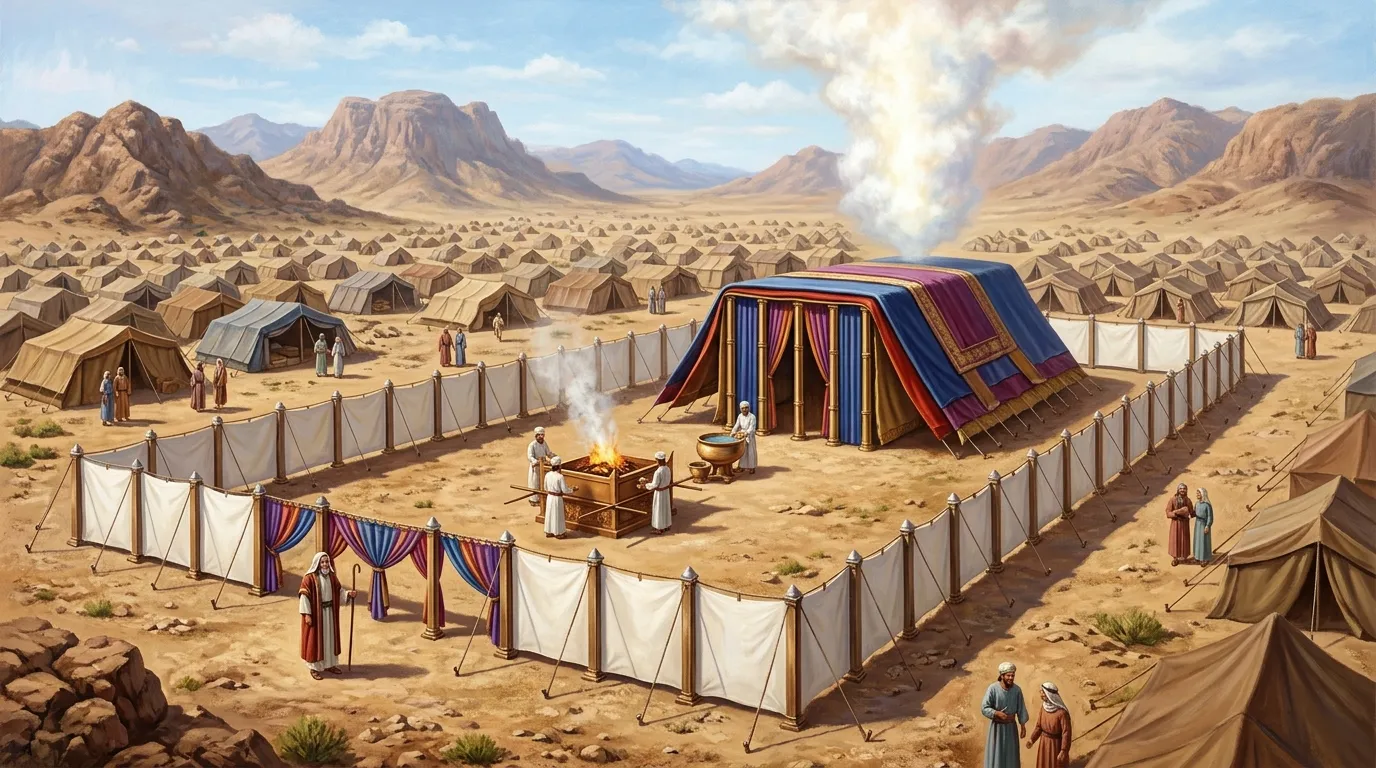
The Tabernacle is one of the most important symbols in the Bible. It was a sacred tent built by the Israelites according to God’s instructions and served as a place of worship and the dwelling place of God’s presence among His people.
The tabernacle meaning in the Bible is deeply connected to God’s desire to live among humanity, guide His people, and provide a way for them to approach Him.
After rescuing Israel from Egypt, God instructed Moses to build the Tabernacle in the wilderness. It was not just a physical structure; every part of it carried spiritual meaning and pointed toward God’s holiness, forgiveness, and covenant.
Imagine a portable place where God’s presence traveled with His people wherever they went. That was the purpose of the Tabernacle—a visible reminder that God was with them.
What Does Tabernacle Mean?
The word tabernacle means:
- Dwelling place
- Tent
- Place of meeting
- Sacred shelter
The Hebrew word often translated as tabernacle is Mishkan, meaning “dwelling” or “place of residence.”
The Tabernacle was where God’s presence was revealed among the Israelites.
“Then have them make a sanctuary for me, and I will dwell among them.” — Exodus 25:8
The Tabernacle symbolized God’s presence with His people.
The Purpose of the Tabernacle
The Tabernacle served several important purposes.
A Place of God’s Presence
It reminded Israel that God was with them.
A Place of Worship
People came to offer sacrifices and worship God.
A Place of Covenant
It represented the relationship between God and Israel.
A Place of Sacrifice
It provided a system for forgiveness and restoration.
A Place of Guidance
God guided His people through His presence.
Parts of the Tabernacle and Their Meanings
The Tabernacle had several important sections, each with spiritual symbolism.
The Outer Court
The outer area contained:
- The bronze altar
- The bronze basin
Meaning:
It represented sacrifice, cleansing, and preparation to come before God.
The Bronze Altar
The altar was where animal sacrifices were offered.
It symbolized:
- Sin being covered
- Forgiveness
- The seriousness of sin
For Christians, it points forward to the sacrifice of Jesus Christ.
The Bronze Basin
The priests washed before entering the holy areas.
It represented:
- Purification
- Spiritual cleansing
- Preparation for service
The Holy Place
Only priests could enter the Holy Place.
It contained:
- The lampstand
- The table of bread
- The altar of incense
Meaning:
It represented worship, prayer, and fellowship with God.
The Golden Lampstand
The lampstand provided light inside the Tabernacle.
It symbolized:
- God’s guidance
- Spiritual light
- Truth
Jesus later described Himself as the light of the world.
The Table of Showbread
The bread represented God’s provision.
It symbolized:
- God’s care
- Dependence on Him
- Fellowship
The Altar of Incense
The incense represented prayers rising to God.
It symbolized:
- Worship
- Prayer
- Relationship with God
The Most Holy Place
The Most Holy Place was the most sacred area.
It contained:
- The Ark of the Covenant
Only the high priest could enter once a year.
It represented:
- God’s throne
- His holiness
- His presence
The Ark of the Covenant
The Ark was the central object inside the Tabernacle.
It contained:
- The tablets of the Ten Commandments
- A jar of manna
- Aaron’s staff
The Ark represented:
- God’s covenant
- His authority
- His faithfulness
The space above the Ark was called the mercy seat, where God’s presence was especially revealed.
The Spiritual Meaning of the Tabernacle
The spiritual significance of the Tabernacle includes:
God’s Presence
God desires to be close to His people.
Holiness
God is holy and worthy of worship.
Redemption
Sacrifice points to forgiveness.
Fellowship
God invites people into relationship with Him.
Guidance
God leads those who trust Him.
The Tabernacle and Jesus Christ
Many Christians see the Tabernacle as pointing toward Jesus.
The New Testament says:
“The Word became flesh and made his dwelling among us.” — John 1:14
Jesus is seen as the ultimate expression of God’s presence among humanity.
The sacrifices and symbols of the Tabernacle point toward themes fulfilled through Christ:
- Forgiveness
- Access to God
- Salvation
- Eternal life
Biblical Symbolism of the Tabernacle
The biblical symbolism of the Tabernacle includes:
Tent
God dwelling with His people.
Fire and Glory
God’s presence.
Sacrifice
The need for forgiveness.
Light
God’s truth and guidance.
Holy Place
Relationship with God.
Veil
The separation caused by sin.
The Tabernacle and Christian Life Today
Although the physical Tabernacle is no longer used, its message remains important.
Believers can reflect on:
- God’s presence in their lives
- The importance of worship
- The need for holiness
- The gift of forgiveness
The Bible teaches that God desires to dwell with His people.
Lessons From the Tabernacle
The Tabernacle teaches believers:
- God is holy.
- God wants a relationship with humanity.
- Forgiveness requires God’s grace.
- Worship should be sincere.
- God’s presence brings guidance.
The Tabernacle reminds us that God is not distant—He desires to be near.
Conclusion
The tabernacle meaning in the Bible represents God’s dwelling place among His people, His holiness, and His desire for a relationship with humanity. Every part of the Tabernacle carried spiritual meaning, pointing to worship, forgiveness, and God’s promises.
For Christians, the Tabernacle also points toward Jesus Christ, through whom believers receive a deeper relationship with God.
The message of the Tabernacle is simple and powerful: God desires to live among His people and guide them with His presence.