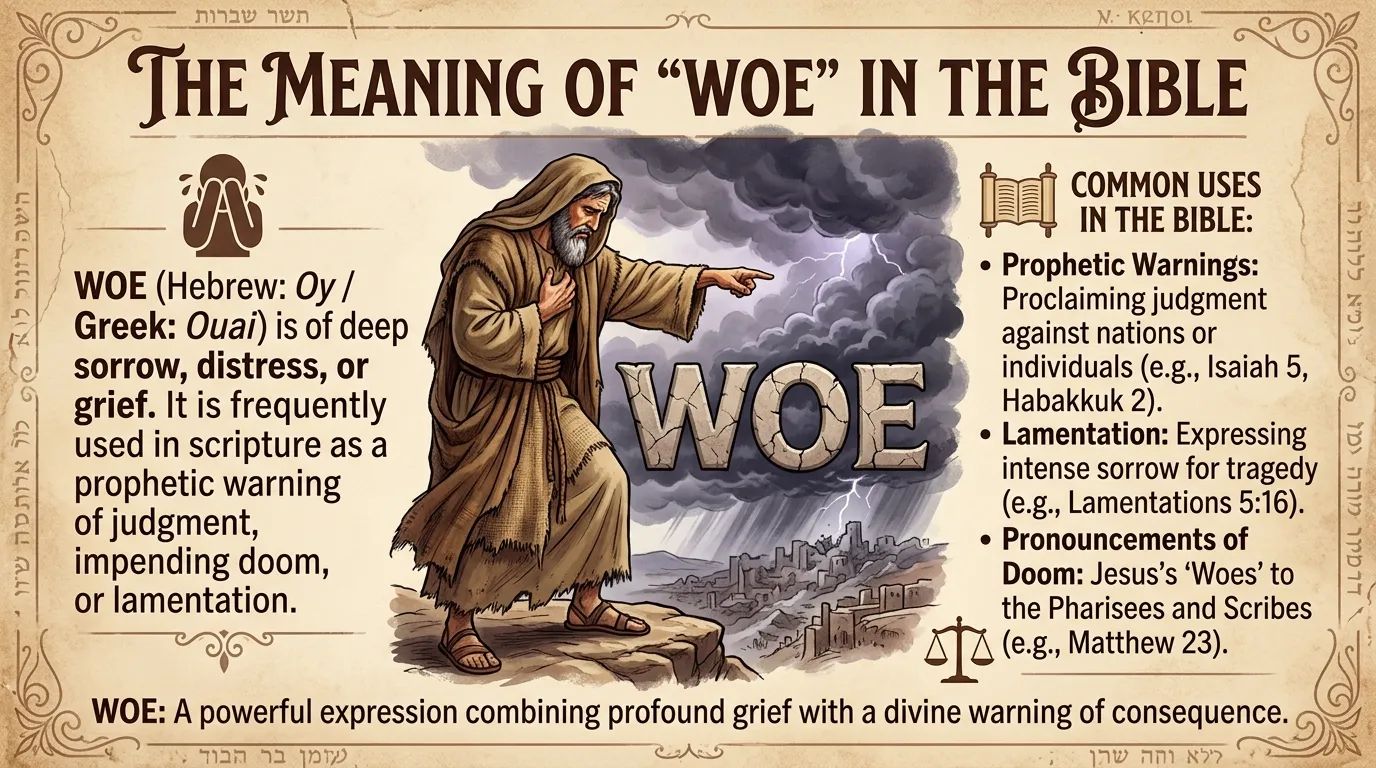
Have you ever heard someone say, “Woe is me,” and wondered what the word woe actually means? In the Bible, this small word carries a powerful message. It often appears in moments when God warns people about sin, calls them to repentance, or announces coming judgment.
The woe meaning in the Bible goes beyond simple sadness or trouble. It is a serious expression used to communicate grief, sorrow, distress, or divine judgment. When prophets, apostles, or even Jesus Himself spoke the word “woe,” it was often meant to get people’s attention and encourage them to turn back to God.
Imagine seeing a warning sign before a dangerous road. The sign is not there to harm you—it is there to protect you. In a similar way, biblical woes serve as spiritual warnings. They remind people that God is holy, that sin has consequences, and that repentance leads to restoration.
Many Christians search for the biblical meaning, Christian significance, and spiritual symbolism of woe because it appears frequently throughout Scripture. Understanding this word can help believers better understand God’s justice, mercy, and desire for people to walk in righteousness.
As we explore the meaning of woe in the Bible, we will discover how it serves as both a warning and an invitation to seek God.
What Does Woe Mean in the Bible?
In Scripture, the word woe is an expression of:
- Sorrow
- Grief
- Distress
- Judgment
- Warning
It often announces that trouble will come because of sin, rebellion, or disobedience.
The Hebrew and Greek words translated as “woe” carry the idea of deep sadness and serious concern.
Woe is both a warning and a declaration of the consequences of turning away from God.
Woe as a Warning From God
One of the most common uses of woe in the Bible is as a warning.
God sent prophets to warn people when they were living in sin.
For example:
“Woe to those who call evil good and good evil.” — Isaiah 5:20
This warning was directed toward people who had rejected God’s standards and were embracing sin.
The purpose of such warnings was not simply punishment.
God wanted people to repent and return to Him.
Biblical woes are often acts of mercy because they give people an opportunity to change.
Woe in the Teachings of Jesus
Jesus frequently used the word “woe” when speaking to religious leaders who were hypocritical or misleading others.
For example:
“Woe to you, teachers of the law and Pharisees, you hypocrites!” — Matthew 23:27
Jesus was not speaking out of hatred.
Instead, He was exposing spiritual problems that needed correction.
His words were meant to awaken people to the truth.
Through these warnings, Jesus demonstrated both justice and love.
The Spiritual Meaning of Woe
The spiritual significance of woe includes several important themes.
A Call to Repentance
Woe reminds people to turn away from sin and seek God.
Recognition of Sin
It highlights areas where people have wandered from God’s path.
God’s Justice
Woe reflects God’s commitment to righteousness.
Spiritual Awakening
Warnings can help people recognize their need for God.
Mercy Before Judgment
God often gives warnings before allowing consequences to occur.
Woe is not just about judgment—it is also about God’s desire to save and restore.
Biblical Symbolism of Woe
The biblical symbolism of woe often includes:
Warning Signs
A signal that change is needed.
Divine Correction
God lovingly correcting His people.
Spiritual Wake-Up Calls
An invitation to pay attention to God’s truth.
Judgment
The consequences of persistent disobedience.
Repentance
The opportunity to return to God.
These symbols reveal both God’s holiness and His compassion.
Isaiah’s Experience With Woe
One of the most famous uses of woe appears in the book of Isaiah.
When Isaiah saw a vision of God’s holiness, he cried out:
“Woe to me! I am ruined!” — Isaiah 6:5
Isaiah recognized his own sinfulness in the presence of a holy God.
This moment teaches an important lesson.
Sometimes woe is not directed toward others—it is a realization of our own need for God’s grace.
After Isaiah confessed, God cleansed and commissioned him.
God’s grace follows genuine repentance.
Woe and God’s Justice
Throughout Scripture, woe is connected to God’s justice.
God is loving, but He is also holy.
He cannot ignore evil forever.
Woe reminds believers that actions have consequences.
At the same time, God’s warnings demonstrate His patience.
He often gives people opportunities to repent before judgment comes.
“The Lord is compassionate and gracious, slow to anger, abounding in love.” — Psalm 103:8
God’s justice is always balanced by His mercy.
Woe and Christian Life Today
Although the Bible was written long ago, the message of woe remains relevant.
Believers can learn from these warnings by:
- Examining their hearts
- Turning away from sin
- Seeking God’s forgiveness
- Living in obedience
- Remaining humble
The purpose is not fear but spiritual growth.
God’s warnings are invitations to walk closer with Him.
Woe in Dreams and Spiritual Reflection
Some people encounter the word “woe” while reading Scripture, praying, or reflecting on spiritual matters.
In a biblical context, woe may encourage someone to:
- Evaluate their relationship with God
- Seek repentance
- Pursue righteousness
- Trust God’s mercy
- Pay attention to spiritual priorities
Any interpretation should always be tested against God’s Word.
Practical Lessons From the Meaning of Woe
Here are simple lessons believers can apply:
- Listen to God’s correction.
- Repent quickly when convicted of sin.
- Seek God’s wisdom daily.
- Walk in humility.
- Trust in God’s mercy and grace.
God’s warnings are designed to protect and guide His people.
Conclusion
The woe meaning in the Bible refers to sorrow, warning, judgment, and a call to repentance. Throughout Scripture, God used woes to warn people about the consequences of sin and to encourage them to return to Him.
Far from being messages of hopelessness, biblical woes reveal God’s love and desire to restore His people. They remind believers that God’s justice is real, but His mercy is always available to those who seek Him.
Remember this encouraging truth:
When God warns, He is often providing an opportunity for repentance, renewal, and a deeper relationship with Him.