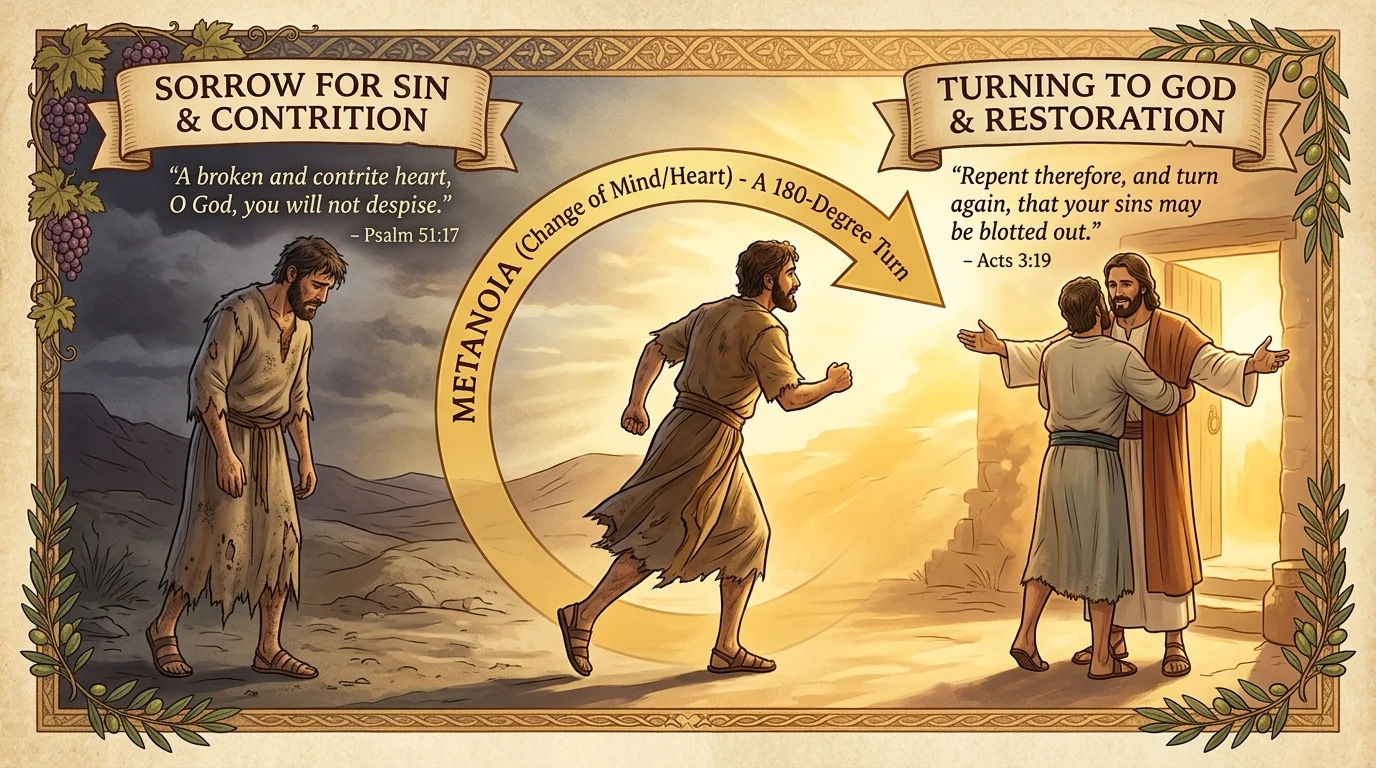
Have you ever taken a wrong turn while traveling and realized you were heading in the wrong direction? The moment you recognize the mistake, you stop, turn around, and return to the correct path. This simple picture helps explain the repentance meaning in the Bible.
Repentance is one of the most important themes in Scripture. It is not merely feeling sorry for a mistake. It is a heartfelt decision to turn away from sin and turn toward God. Throughout the Bible, God lovingly calls people to repent so they can experience forgiveness, restoration, and a renewed relationship with Him.
Imagine a child who disobeys a loving parent. The child feels regret, admits the mistake, and returns to the parent with a sincere heart. Instead of rejection, the child receives love and guidance. This reflects the heart of biblical repentance. God does not call people to repentance because He wants to punish them. He calls them because He wants to restore them.
Many people search for the Christian meaning, biblical symbolism, and spiritual significance of repentance because they desire a deeper understanding of God’s grace and mercy.
The beautiful truth is that repentance opens the door to healing, hope, and spiritual growth. It reminds believers that no matter how far they have wandered, God welcomes those who sincerely return to Him.
Let’s explore what repentance means in Scripture and why it remains so important for every believer.
What Does Repentance Mean in the Bible?
The repentance meaning in the Bible is a change of heart and mind that leads a person to turn away from sin and turn toward God.
Repentance includes:
- Recognizing sin
- Feeling genuine sorrow
- Asking God for forgiveness
- Changing direction
- Choosing obedience
Repentance is not just saying “I’m sorry.”
True repentance involves transformation.
“Repent, then, and turn to God, so that your sins may be wiped out.” — Acts 3:19
This verse shows that repentance includes turning back to God and receiving His forgiveness.
Repentance is a change that begins in the heart and affects the way we live.
Why Is Repentance Important?
The Bible teaches that all people make mistakes and fall short of God’s perfect standard.
Because of sin, people need forgiveness and restoration.
Repentance is important because it helps restore a person’s relationship with God.
Through repentance:
- Hearts are renewed
- Sins are forgiven
- Faith grows stronger
- Spiritual healing begins
God does not ask people to repent to make life harder.
He invites them to repent so they can experience His mercy and love.
Repentance leads people back into fellowship with God.
Repentance in the Old Testament
The call to repentance appears throughout the Old Testament.
God repeatedly invited His people to turn back to Him when they wandered away.
“Return to Me, and I will return to you.” — Malachi 3:7
This invitation reveals God’s loving character.
Even when people failed, God continued to offer grace.
The prophets often urged Israel to:
- Leave sinful practices
- Trust God
- Follow His commandments
- Seek spiritual renewal
Repentance was always connected to restoration.
Repentance in the Teachings of Jesus
Jesus emphasized repentance throughout His ministry.
One of His earliest messages was:
“Repent, for the kingdom of heaven has come near.” — Matthew 4:17
Jesus called people to prepare their hearts and place their faith in God.
He showed that repentance is not about fear.
It is about transformation.
Jesus welcomed sinners, forgave them, and encouraged them to live differently.
His ministry demonstrated both truth and mercy.
Repentance opens the heart to God’s grace.
The Story of the Prodigal Son
One of the clearest examples of repentance is the parable of the prodigal son.
The son left his father and wasted his inheritance.
Eventually, he realized his mistakes and decided to return home.
When he came back, his father welcomed him with open arms.
This story beautifully illustrates repentance.
The son:
- Recognized his wrongdoing
- Changed his direction
- Returned to his father
The father represents God’s love and forgiveness.
God rejoices when people turn back to Him.
Spiritual Significance of Repentance
The spiritual meaning of repentance includes several important lessons.
1. Humility
Repentance requires honesty before God.
2. Forgiveness
God offers mercy to those who seek Him.
3. Renewal
Repentance brings spiritual refreshment.
4. Growth
Believers learn and mature through repentance.
5. Freedom
Turning from sin leads to greater peace.
Repentance is not the end of a journey—it is often the beginning of a new one.
Positive Blessings of Repentance
When believers sincerely repent, they often experience:
- Peace with God
- Renewed hope
- Spiritual growth
- Greater joy
- Stronger faith
The Bible repeatedly shows that repentance leads to blessing rather than condemnation.
God desires restoration, not destruction.
“If we confess our sins, He is faithful and just and will forgive us.” — 1 John 1:9
This promise provides comfort for every believer.
Repentance in Everyday Life
Repentance is not only for dramatic life changes.
It is part of daily Christian living.
Believers may repent when they:
- Speak harshly
- Act selfishly
- Ignore God’s guidance
- Struggle with pride
- Fail to show love
Regular repentance helps keep the heart soft and responsive to God.
It encourages continual spiritual growth.
Repentance in Dreams or Spiritual Reflection
Some people dream about returning home, cleaning something dirty, changing direction, or asking for forgiveness.
Such dreams may symbolize themes connected to repentance and spiritual renewal.
They can encourage self-examination and prayer.
However, discernment should always come through Scripture and seeking God’s wisdom.
“If any of you lacks wisdom, you should ask God.” — James 1:5
God faithfully guides those who seek Him.
Practical Lessons About Repentance
Here are simple ways to practice biblical repentance:
- Pray honestly before God.
- Admit mistakes quickly.
- Seek forgiveness when needed.
- Read God’s Word regularly.
- Ask God to help you grow.
Repentance keeps the heart close to God.
Repentance and Your Personal Faith Journey
Perhaps you feel burdened by past mistakes.
Maybe you wonder whether God can forgive you.
The message of repentance brings hope.
God’s mercy is greater than your failures.
His love is stronger than your regrets.
His grace is available today.
No matter where you have been, God invites you to return to Him.
A sincere heart can always find forgiveness through God’s grace.
Conclusion
The repentance meaning in the Bible is the act of turning away from sin and turning toward God with a sincere heart. It involves humility, faith, forgiveness, and transformation.
Throughout Scripture, repentance is presented as a gift rather than a punishment. It opens the door to restoration, spiritual growth, and a deeper relationship with God.
The Bible’s message is clear: God lovingly welcomes those who seek Him and offers forgiveness through His grace.
So remember this comforting truth:
No matter how far you may have wandered, God’s arms remain open, ready to forgive, restore, and lead you into a new beginning.