Have you ever been hurt by someone’s words?
Maybe it was spoken in anger.
Maybe it was said carelessly.
Maybe someone mocked you, insulted you, or made you feel worthless.
Even short words can leave deep pain in the heart.
The Bible understands this deeply.
That is why Scripture warns believers to speak carefully, kindly, and truthfully.
One unusual word found in the Bible is Raca.
Many people read it and wonder:
What does Raca mean in the Bible?
Why did Jesus use this word?
What spiritual lesson does it teach believers today?
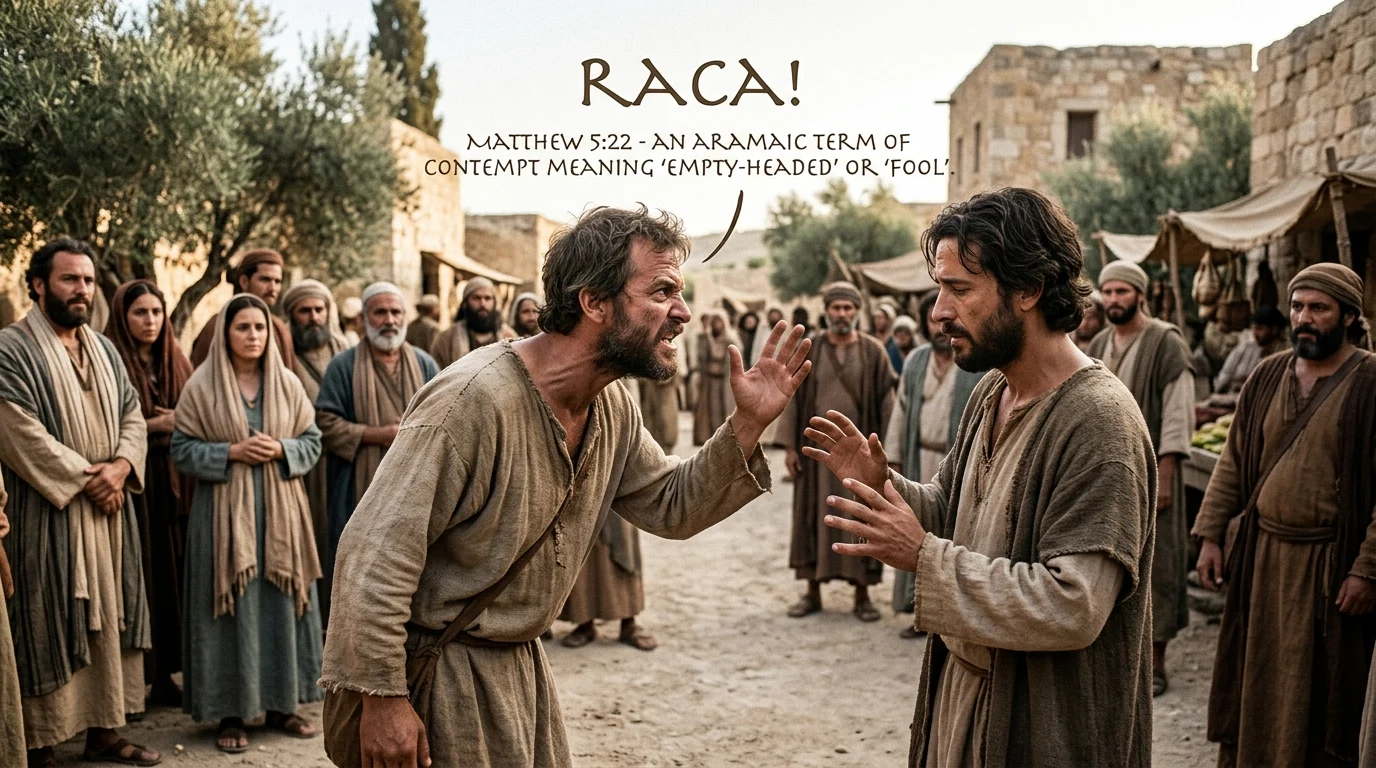
Imagine standing in a crowded place while someone publicly insults another person. The room becomes quiet. Faces turn serious. The pain is felt immediately.
That picture helps us understand the seriousness of this word.
The Raca meaning in the Bible is connected to anger, insults, pride, and the power of speech. But hidden inside this warning is also a beautiful message about love, humility, forgiveness, and the importance of the heart.
Let us explore this powerful biblical meaning together.
What Does Raca Mean in the Bible?
The word Raca appears in the New Testament.
It is found in the Gospel of Matthew.
“Anyone who says to a brother or sister, ‘Raca,’ is answerable to the court.” — Matthew 5:22
The word Raca comes from an old Aramaic language.
It was an insult.
It roughly meant:
- Empty-headed
- Foolish
- Worthless person
- Good-for-nothing
It was a disrespectful way to speak about someone.
This word was not simply casual teasing.
It came from a heart filled with anger, pride, or contempt.
That is why Jesus spoke seriously about it.
Why Did Jesus Mention Raca?
Jesus Christ mentioned Raca during the Sermon on the Mount.
In this teaching, Jesus explained that sin is not only about outward actions.
It also begins in the heart.
Many people thought they were righteous if they avoided murder.
But Jesus went deeper.
He taught:
- Anger matters
- Hatred matters
- Words matter
- Attitudes matter
This was powerful.
Jesus showed that insulting others can reveal spiritual problems inside the heart.
That is an important Christian meaning.
The Spiritual Danger of Angry Words
The Bible teaches that words carry power.
Words can:
- Heal
- Encourage
- Guide
- Comfort
But words can also:
- Wound
- Shame
- Divide
- Destroy
The word Raca reminds believers to guard their speech carefully.
In the book of Proverbs, Scripture teaches:
“Death and life are in the power of the tongue.” — Proverbs 18:21
What a strong warning.
Our words reveal the condition of the heart.
Raca and the Heart
Jesus cared deeply about the heart.
Someone may look kind on the outside while carrying bitterness inside.
But God sees deeper.
The spiritual message behind Raca is not only:
“Do not insult people.”
It is also:
“Do not let anger control your heart.”
Why?
Because anger can slowly grow into:
- Pride
- Bitterness
- Hatred
- Division
- Spiritual darkness
That is why believers are called to seek peace and forgiveness.
God Calls Believers to Respect Others
Every person carries value because every person is created by God.
The Bible teaches in the book of Genesis that humanity was created in God’s image.
This changes how believers should treat others.
Even during disagreements.
Even during frustration.
Even during conflict.
God calls believers to:
- Speak with wisdom
- Show kindness
- Practice humility
- Control anger
- Choose peace
That is beautiful biblical symbolism.
The Spiritual Meaning of Raca
So what spiritual message does Raca carry today?
It reminds believers:
1. Words Matter
Speech can heal or hurt.
2. Anger Must Be Controlled
Uncontrolled anger harms the heart.
3. Every Person Has Value
God created every life with purpose.
4. Humility Matters
Pride often produces harsh words.
5. God Cares About the Heart
Inner attitudes matter deeply.
Have you ever spoken from anger and later regretted it?
Most people have.
That is why God offers grace, wisdom, and growth.
Raca in Dreams or Real Life
What if you dream about arguments, insults, shouting, or rejection?
It may carry spiritual meaning.
Peaceful Resolution Dream
It may symbolize:
- Healing
- Forgiveness
- Emotional growth
- Reconciliation
Heavy or Emotional Dream
It may mean:
- Unresolved anger
- Need for forgiveness
- Emotional wounds
- A call to guard your words
Always test spiritual messages through prayer and Scripture.
God speaks with wisdom, truth, and peace.
How Believers Can Guard Their Words
1. Pause Before Speaking
Wisdom often grows in silence.
2. Pray During Anger
God brings peace to the heart.
3. Speak With Kindness
Gentle words bring healing.
4. Forgive Quickly
Bitterness grows when held too long.
5. Stay Humble
Humility protects relationships.
Words shaped by love carry life.
Practical Lessons From Raca
What Can We Learn?
- Words have spiritual power.
- Anger must be controlled wisely.
- Every person deserves respect.
- God sees the heart deeply.
- Kindness reflects spiritual maturity.
A peaceful heart often creates peaceful words.
Conclusion
The Raca meaning in the Bible teaches an important lesson about anger, insults, and the condition of the heart.
Jesus used this word to remind believers that speech matters deeply to God.
Not only actions—
but attitudes.
Not only behavior—
but the heart itself.
So if anger has been growing inside lately—
Remember this:
God can soften the heart.
God can heal relationships.
God can teach wisdom in speech.
And when love guides your words—
peace can grow where hurt once lived.