Imagine walking through a dark path at night. You cannot see what lies ahead. The road bends, and the shadows seem deep. Yet you keep moving forward because someone you trust has told you the path is safe.
This simple picture reflects the meaning of faith in the Bible.
Faith is one of the most important themes in Scripture. It is the foundation of a believer’s relationship with God. Through faith, people in the Bible overcame fear, endured hardship, and received God’s promises. Faith gave them strength when they could not see the outcome.
Many Christians wonder about the deeper meaning of faith. Is it simply believing? Is it trusting God during difficult times? Or is it something even greater?
The Bible presents faith as a living and active connection with God. It is not blind hope or wishful thinking. Instead, it is confidence in God’s character, His Word, and His promises.
Whether you are facing uncertainty, seeking guidance, or longing for spiritual growth, understanding the biblical meaning of faith can bring comfort and direction.
So what does faith truly mean in Scripture, and why does it matter so much in the Christian life?
Biblical Meaning of Faith in the Bible
The meaning of faith in the Bible is best explained in one of the most famous verses about faith:
Faith Is Confidence in God
Hebrews 11:1 says:
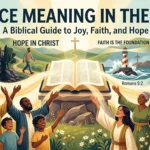
“Now faith is confidence in what we hope for and assurance about what we do not see.”
This verse shows that faith goes beyond physical evidence. Faith trusts God even when answers have not yet appeared. It rests in the belief that God is working, even when circumstances seem unclear.
Faith is not based on feelings. Some days believers feel strong. Other days they feel weak. True faith depends on God’s unchanging nature, not on human emotions.
Faith Means Trusting God’s Promises
Throughout Scripture, people demonstrated faith by trusting God.
Consider Abraham, whom the Bible calls the father of faith. God promised Abraham that he would become the father of many nations. At the time, this seemed impossible because he and his wife were very old.
Yet Abraham trusted God’s promise.
The Bible says in Romans 4:20-21 that Abraham did not waver in unbelief but was fully persuaded that God could do what He promised.
His story teaches that faith often requires patience. God’s timing may differ from ours, but His promises remain true.
Faith Brings Us Closer to God
Hebrews 11:6 states:
“Without faith it is impossible to please God.”
This does not mean believers must be perfect. Instead, God desires hearts that trust Him.
Faith opens the door to a deeper relationship with the Lord. Through faith, Christians pray, worship, and depend on God’s guidance each day.
Faith in Jesus Christ
The New Testament places special emphasis on faith in Jesus.
John 3:16 teaches that whoever believes in Jesus will have eternal life.
This belief is not merely agreeing with facts. It involves trusting Christ as Savior and following Him.
Through faith in Jesus, believers receive forgiveness, grace, and a new life with God.
When Faith Is Tested
The Bible also shows that faith can be tested.
Many biblical figures faced trials. Job suffered loss. David faced enemies. Peter experienced fear and doubt.
Yet these struggles strengthened their faith.
James 1:3 explains that the testing of faith produces perseverance. Difficult seasons often become opportunities for spiritual growth and deeper trust in God.
A Warning About Lack of Faith
Scripture also warns against unbelief.
When people rely only on what they can see, they may miss God’s greater plans. Fear, worry, and doubt can weaken spiritual confidence.
However, the Bible consistently encourages believers to return to God through prayer and trust.
Even small faith can have great power. Jesus said in Matthew 17:20 that faith as small as a mustard seed can move mountains.
This powerful biblical symbolism reminds believers that God works through sincere trust, no matter how small it may seem.
Spiritual Significance and Symbolism
The spiritual symbolism of faith points to a journey of growth, trust, and transformation.
Faith often begins as a small seed. Over time, it grows stronger through prayer, worship, and experiences with God.
One important spiritual message behind faith is learning to depend on God rather than ourselves. Human plans can fail, but God’s wisdom never fails.
Faith also symbolizes hope. Even during difficult seasons, believers can trust that God is present and working for their good.
Another powerful symbol connected to faith is light. Just as light guides travelers through darkness, faith guides believers through uncertainty.
Many Christians experience moments when they do not understand what God is doing. During those times, faith becomes a reminder that God’s perspective is greater than our own.
This process often leads to spiritual awakening, renewed trust, and deeper Christian maturity.
Faith teaches believers to keep moving forward, even when the destination is not yet visible.
Biblical Interpretations in Dreams or Real Life
Faith can appear in both dreams and everyday experiences.
In some Christian dream interpretation traditions, dreams involving walking confidently, crossing bridges, climbing mountains, or following a light may symbolize growing faith and trust in God.
A peaceful dream often reflects spiritual confidence, hope, and reliance on God’s guidance.
A dream filled with fear or uncertainty may reveal areas where a person needs to trust God more deeply. Such dreams are not necessarily warnings. Instead, they can be invitations to seek God through prayer and reflection.
In real life, faith appears whenever believers choose trust over fear.
It may look like praying during a difficult situation, waiting patiently for God’s answer, or stepping forward when God calls despite uncertainty.
Whether experienced in dreams or daily life, faith points toward God’s presence and His ongoing work in a believer’s journey.
The key is to seek wisdom through prayer and compare every experience with Scripture.
Practical Lessons & Faith Insights
Faith grows when it is practiced.
- Pray regularly, even when answers seem delayed.
- Read and reflect on Bible verses about faith.
- Remember God’s past faithfulness.
- Trust God’s timing instead of rushing ahead.
- Stay connected to other believers for encouragement.
Small steps of faith today can lead to great spiritual growth tomorrow.
Conclusion
The meaning of faith in the Bible is far more than simple belief. Faith is a living trust in God’s character, promises, and guidance. It gives hope during uncertainty, strength during trials, and confidence in God’s plan.
Whether faith appears through prayer, daily challenges, or moments of spiritual reflection, it reminds believers that God is always present and faithful. As you continue your journey, hold firmly to God’s promises and trust that He is leading you every step of the way. With faith, even the unseen becomes filled with hope and purpose.