Have you ever stood at a crossroads in life and wondered which way to go? Maybe you prayed for an answer but could not see the path ahead. In moments like these, many Christians hold on to one powerful thing: faith.
Imagine a traveler walking through a dark valley at night. The traveler cannot see the whole road. Yet, with a small lantern in hand, each step becomes clear. That is often what faith feels like. We may not know what comes next, but we trust God to guide us forward.
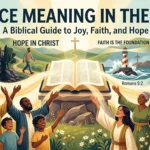
The Bible talks about faith from beginning to end. It is more than believing that God exists. It is trusting His promises, even when life feels uncertain. Faith gives strength during hard times, hope during waiting seasons, and peace when answers seem far away.
Many people search for the faith meaning in the Bible because they want to understand God’s message for their lives. They may be facing challenges, seeking spiritual guidance, or looking for comfort. The Bible offers wisdom and encouragement for all these situations.
So, what does faith truly mean in Scripture? Let’s explore its biblical symbolism, spiritual significance, and the lessons it teaches believers today.
Biblical Meaning of Faith in the Bible
The faith meaning in the Bible centers on complete trust in God. Faith is believing that God is who He says He is and that He will do what He promises.
One of the most famous Bible verses about faith is:
“Now faith is confidence in what we hope for and assurance about what we do not see.” — Hebrews 11:1
This verse shows that faith goes beyond visible proof. It is confidence in God’s power, love, and plan, even when circumstances seem unclear.
Faith as Trust in God
Throughout Scripture, faith is closely connected to trust.
Abraham is one of the greatest examples. God told him to leave his homeland and travel to a place he had never seen. Abraham obeyed because he trusted God.
“By faith Abraham, when called to go to a place he would later receive as his inheritance, obeyed and went.” — Hebrews 11:8
Abraham’s story teaches that faith often requires stepping forward before we have all the answers.
Faith as a Relationship With God
Faith is not just believing facts about God. It is having a personal relationship with Him.
When we pray, worship, and seek God, our faith grows stronger. We learn to depend on Him in every season of life.
Jesus often praised people who showed strong faith. He healed the sick, comforted the hurting, and encouraged those who trusted Him.
“Your faith has healed you.” — Mark 5:34
This demonstrates how faith opens the door to experiencing God’s work in our lives.
Faith Brings Hope
One important aspect of Christian meaning behind faith is hope.
Life can bring pain, loss, and uncertainty. Faith reminds believers that God remains in control.
Romans 15:13 says:
“May the God of hope fill you with all joy and peace as you trust in him.”
Faith allows Christians to look beyond present difficulties and hold on to God’s promises.
Faith During Difficult Times
The Bible does not promise an easy life. Instead, it teaches believers to trust God through trials.
Consider Job. He lost many things, yet he continued to trust God. His story shows that faith is not the absence of struggles. Faith is remaining faithful in the middle of them.
When challenges come, faith becomes an anchor that keeps believers steady.
A Warning About Weak Faith
The Bible also gives warnings about doubt and fear.
When Peter walked on water toward Jesus, he was doing well until he focused on the storm around him. Fear replaced faith, and he began to sink.
“You of little faith, why did you doubt?” — Matthew 14:31
This story does not condemn believers for struggling. Instead, it reminds us to keep our eyes on Christ rather than our fears.
Faith and Salvation
One of the most important teachings in Christianity is that salvation comes through faith.
Ephesians 2:8 says:
“For it is by grace you have been saved, through faith.”
This means people are saved because they trust in Jesus Christ and accept God’s grace.
The spiritual message of faith is clear: God invites people into a relationship with Him through trust and belief.
Spiritual Significance and Symbolism
The spiritual symbolism of faith is rich and meaningful. Faith often symbolizes a bridge between humanity and God.
Faith represents:
- Trust in God’s promises
- Hope during uncertainty
- Spiritual growth
- Dependence on God
- Courage to move forward
- Confidence in God’s plan
In daily life, faith often grows through small acts of obedience. A person may continue praying during a difficult season. Another may forgive someone who hurt them. Someone else may trust God while waiting for an answer.
These moments may seem small, but they reveal a heart that believes God is present and working.
Faith also symbolizes transformation. As believers trust God, they often become more patient, loving, and peaceful. Their perspective changes because they learn to rely on God’s wisdom rather than their own understanding.
Many Christians describe faith as a journey. There are seasons of growth, waiting, learning, and renewal. Through each stage, God uses faith to draw people closer to Him.
This process often leads to a deeper spiritual awakening and a stronger awareness of God’s presence.
Biblical Interpretations in Dreams or Real Life
People sometimes wonder if faith-related experiences in dreams carry a spiritual meaning.
In Christian dream interpretation, symbols connected to faith may point toward trust, guidance, or a call to grow spiritually.
For example:
A Peaceful Faith Experience
If a dream feels calm and uplifting, it may symbolize God’s reassurance and encouragement. It could be a reminder to keep trusting Him.
Facing Obstacles
Dreams involving mountains, storms, or difficult paths may reflect challenges in real life. Spiritually, they can represent situations where God is asking you to rely on Him more deeply.
Fear and Doubt
If a dream involves confusion or fear, it may reveal personal worries. Such dreams can serve as reminders to bring concerns to God through prayer.
In real life, faith often appears through unexpected peace during hard times, answered prayers, wise guidance, or strength to keep moving forward.
No matter the situation, Christians are encouraged to seek God’s wisdom through Scripture and prayer rather than relying only on dreams or feelings.
Practical Lessons & Faith Insights
The Bible teaches simple but powerful lessons about faith:
- Trust God even when you cannot see the outcome.
- Stay close to God through prayer and Scripture.
- Choose faith over fear whenever possible.
- Remember God’s past faithfulness.
- Wait patiently for His timing.
Faith grows one step at a time. Every prayer, act of trust, and moment of obedience strengthens your walk with God.
Conclusion
The faith meaning in the Bible is much more than belief. It is a deep trust in God’s character, promises, and guidance. Faith brings hope during uncertainty, strength during trials, and peace in every season.
Through biblical examples, powerful Bible verses about faith, and everyday experiences, we see that faith connects believers to God’s presence and purpose. Whether you are facing challenges or seeking direction, remember that God honors those who trust Him.
Keep praying, keep believing, and keep walking forward. Even when the path is unclear, faith reminds us that God is leading every step of the journey.