The word eschatology refers to the study of the last things or the final events in God’s plan for humanity. In Christianity, the eschatology meaning in the Bible focuses on what Scripture teaches about the end times, the return of Jesus Christ, resurrection, judgment, and the eternal kingdom of God.
The Bible does not present the future as something random or without purpose. Instead, it reveals that history is moving toward God’s ultimate plan. From the beginning of creation to the final restoration of all things, Scripture shows that God is in control.
Imagine a story where every chapter leads toward a final and meaningful conclusion. Biblical eschatology teaches that human history is moving toward the fulfillment of God’s promises.
Many Christians study biblical eschatology because it helps them understand topics such as:
- The second coming of Christ
- The resurrection
- Heaven and eternal life
- Final judgment
- The new creation
As we explore eschatology in the Bible, we will discover its meaning, importance, and message of hope.
What Does Eschatology Mean?
The word eschatology comes from Greek roots:
- Eschatos — last or final
- Logos — study or teaching
So, eschatology means:
“The study of last things.”
In biblical terms, it refers to teachings about:
- The end of the age
- God’s final judgment
- The destiny of humanity
- The fulfillment of God’s promises
Eschatology in the Bible
Eschatological themes appear throughout Scripture.
The Bible discusses the future in both the Old and New Testaments.
Important biblical books and passages include:
- Daniel
- Isaiah
- Ezekiel
- Matthew 24
- 1 Thessalonians
- 1 Corinthians
- Revelation
These passages describe God’s ultimate victory over evil and the restoration of creation.
The Second Coming of Jesus Christ
One of the central teachings of Christian eschatology is the return of Jesus.
Jesus promised His followers that He would come again.
“I will come back and take you to be with me.” — John 14:3
The second coming represents:
- Hope
- Justice
- Restoration
- The fulfillment of God’s promises
Christians believe that Jesus’ return will mark a major moment in God’s final plan.
The Last Days in the Bible
The Bible often speaks about the “last days.”
The last days refer to the period leading up to God’s final purposes being completed.
The New Testament teaches that believers should live with:
- Faithfulness
- Watchfulness
- Hope
- Spiritual readiness
The last days are not only about future events but also about living faithfully in the present.
The Resurrection of the Dead
A major part of biblical eschatology is the resurrection.
The Bible teaches that the dead will be raised.
“There will be a resurrection of both the righteous and the wicked.” — Acts 24:15
The resurrection points to:
- God’s power over death
- Eternal life
- Final justice
For Christians, the resurrection is connected to the victory of Jesus over death.
Judgment in Biblical Eschatology
The Bible teaches that God will judge humanity with justice.
Final judgment includes:
- Accountability for actions
- Justice against evil
- God’s righteous authority
Jesus taught about judgment and the importance of living according to God’s truth.
God’s judgment is not only about punishment but also about restoring justice.
Heaven and Eternal Life
Christian eschatology includes the promise of eternal life with God.
The Bible describes a future where believers experience:
- Peace
- Joy
- God’s presence
- Freedom from suffering
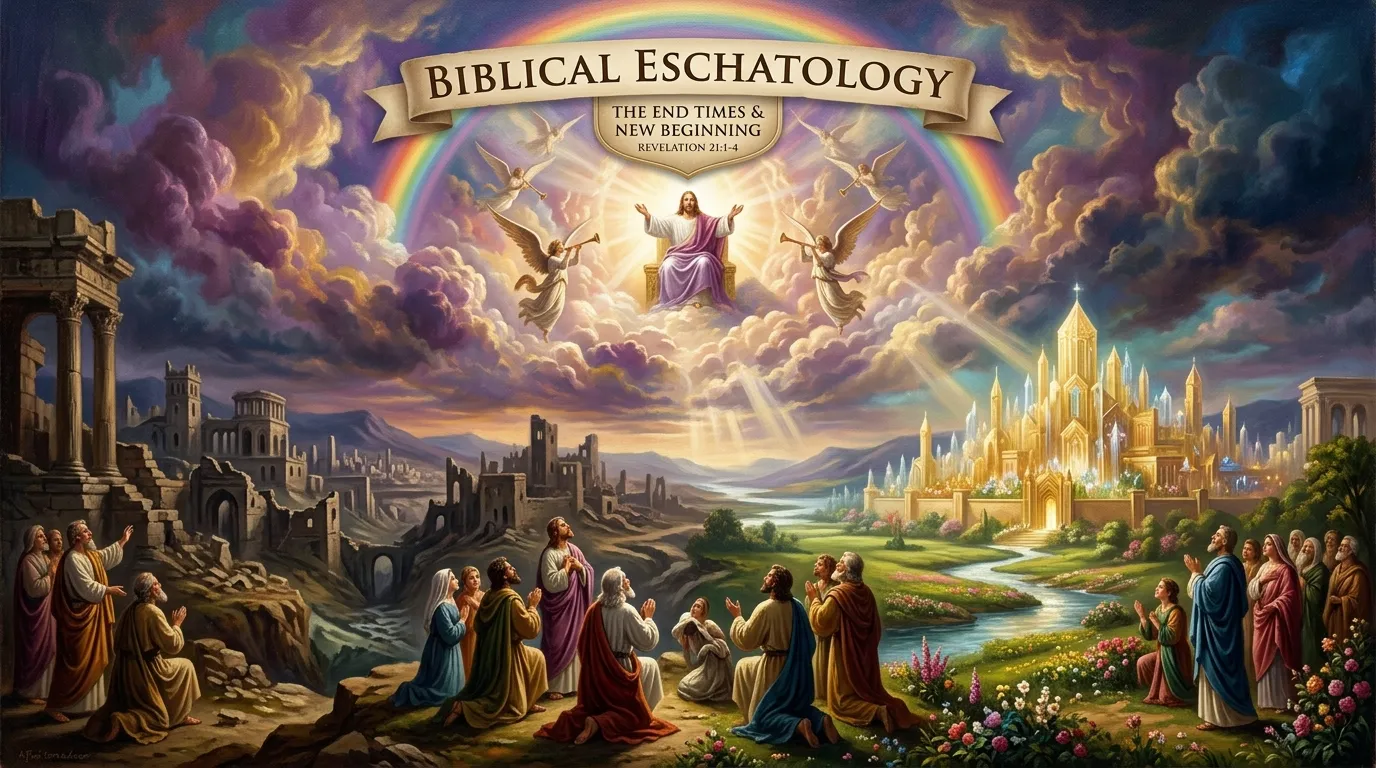
Revelation describes God’s final kingdom where:
“He will wipe every tear from their eyes.” — Revelation 21:4
This is one of the greatest hopes in Christian faith.
The New Heaven and New Earth
The Bible ends with the vision of a renewed creation.
“I saw a new heaven and a new earth.” — Revelation 21:1
This represents:
- Restoration
- Renewal
- God’s perfect kingdom
- The end of suffering
Biblical eschatology teaches that God’s goal is not destruction but restoration.
The Spiritual Meaning of Eschatology
The spiritual significance of eschatology includes:
Hope
Believers look forward to God’s promises.
Faithfulness
The future motivates faithful living.
Justice
God will make all things right.
Eternal Perspective
Life has meaning beyond this world.
Trust in God
History remains under God’s control.
Biblical Symbolism in Eschatology
Eschatological symbols appear throughout Scripture.
Light
Represents God’s truth and victory.
Fire
Can symbolize purification and judgment.
Crown
Represents reward and victory.
New Jerusalem
Represents God’s eternal kingdom.
Harvest
Represents final judgment and gathering.
These images communicate spiritual truths about God’s final work.
Why Is Eschatology Important for Christians?
Studying biblical eschatology helps believers:
- Understand God’s promises
- Strengthen their faith
- Live with hope
- Prepare spiritually
- Trust God’s plan
Eschatology is not meant to create fear alone. It reveals that God will ultimately defeat evil and bring restoration.
Practical Lessons From Biblical Eschatology
Believers can apply eschatological teachings by:
- Staying faithful to God
- Living with purpose
- Loving others
- Sharing hope
- Trusting God’s timing
The future promises of God should influence how Christians live today.
Conclusion
The eschatology meaning in the Bible refers to the study of the last things and God’s final plan for creation. It includes teachings about Jesus’ return, resurrection, judgment, eternal life, and the restoration of all things.
Biblical eschatology reminds believers that history is not meaningless. God is guiding everything toward His perfect purpose.
The message of biblical eschatology is a message of hope: God will complete His promises and establish His eternal kingdom.