Have you ever wished you could erase a mistake and start over with a clean heart? Most people know what it feels like to regret something they have said or done. The good news of the Bible is that God made a way for people to be forgiven and restored. This beautiful truth is known as atonement.
The atonement meaning in the Bible is one of the most important teachings in Christian faith. It explains how God deals with sin and how people can be brought back into a right relationship with Him. From the Old Testament sacrifices to the death and resurrection of Jesus Christ, the Bible tells a story of God’s love, mercy, and desire to save His people.
Imagine a broken bridge separating two sides of a river. No matter how much people want to cross, the gap keeps them apart. Atonement is like the bridge that restores the connection. It removes the barrier created by sin and allows people to draw near to God again.
Many Christians search for the Christian meaning, biblical symbolism, and spiritual significance of atonement because it lies at the heart of the Gospel message. Without atonement, there would be no forgiveness, no reconciliation, and no hope of eternal life.
As we explore the meaning of atonement in Scripture, we will discover the depth of God’s love and the incredible gift He offers through Jesus Christ.
What Does Atonement Mean in the Bible?
The word atonement refers to making peace, restoring a relationship, or covering sin.
In biblical terms, atonement is God’s provision for dealing with human sin so that people can be reconciled to Him.
Atonement involves:
- Forgiveness
- Reconciliation
- Mercy
- Redemption
- Restoration
Sin separates people from God, but atonement provides a way for that separation to be removed.
“For the life of a creature is in the blood, and I have given it to you to make atonement for yourselves.” — Leviticus 17:11
This verse shows that atonement was central to God’s plan from the beginning.
Atonement restores the relationship between God and humanity.
Atonement in the Old Testament
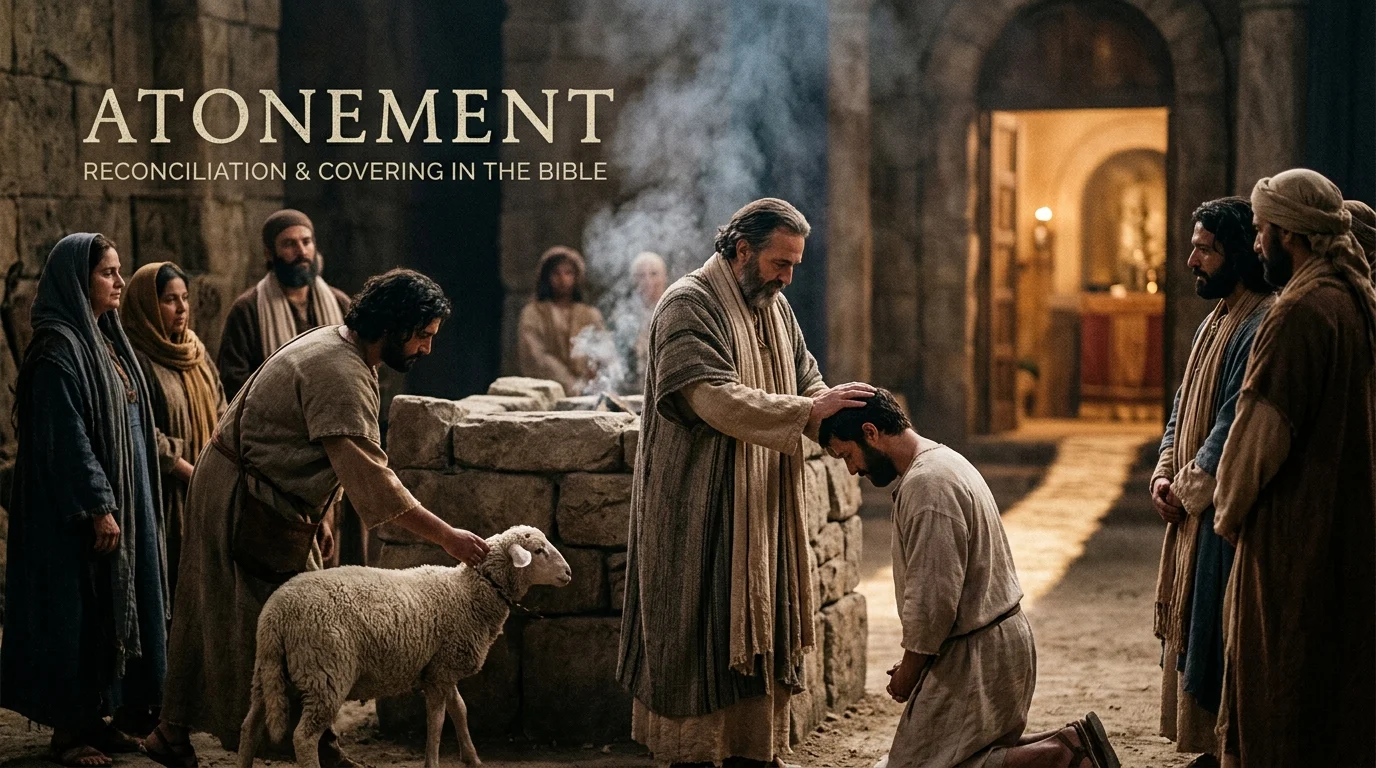
In the Old Testament, God instructed His people to offer sacrifices for sin.
Animals were sacrificed as a symbol of forgiveness and cleansing.
One of the most important events was the Day of Atonement.
“This is to be a lasting ordinance for you: Atonement is to be made once a year.” — Leviticus 16:34
On this special day, the high priest entered the Most Holy Place to make atonement for the sins of the nation.
These sacrifices pointed to a greater solution that would come later.
They demonstrated that sin is serious but also showed God’s desire to forgive.
The Old Testament sacrifices prepared the way for God’s ultimate plan of salvation.
Jesus Christ and the Ultimate Atonement
The New Testament reveals that Jesus Christ became the perfect and final sacrifice for sin.
Unlike animal sacrifices, Jesus offered Himself once and for all.
“He is the atoning sacrifice for our sins.” — 1 John 2:2
Through His death on the cross, Jesus paid the penalty for sin and opened the way for people to be reconciled with God.
His sacrifice was complete and sufficient.
Because of Jesus, believers no longer need repeated sacrifices.
Jesus accomplished the ultimate atonement through His death and resurrection.
Why Is Atonement Necessary?
The Bible teaches that all people have sinned.
“For all have sinned and fall short of the glory of God.” — Romans 3:23
Sin creates a barrier between humanity and God.
Without atonement, that separation would remain.
Atonement is necessary because:
- God is holy.
- Sin must be addressed.
- People need forgiveness.
- Reconciliation is needed.
God’s love provided the solution through Jesus Christ.
Atonement demonstrates both God’s justice and His mercy.
The Spiritual Significance of Atonement
The spiritual meaning of atonement includes several powerful truths.
Forgiveness
Atonement brings forgiveness of sins.
Reconciliation
It restores a relationship with God.
Redemption
Believers are rescued from the power of sin.
Peace
Atonement brings peace between God and humanity.
New Life
Through Christ, believers receive spiritual renewal.
Atonement reveals the depth of God’s love and grace.
Biblical Symbolism of Atonement
The Bible uses several symbols to explain atonement.
Sacrifices
Pointed forward to Christ’s sacrifice.
Blood
Symbolized life and cleansing.
The Passover Lamb
Foreshadowed Jesus as the Lamb of God.
The Mercy Seat
Represented God’s forgiveness and presence.
These symbols help believers understand the seriousness of sin and the greatness of God’s mercy.
Atonement and God’s Love
One of the most beautiful aspects of atonement is that it begins with God’s love.
God did not wait for people to become perfect.
He took the first step.
“For God so loved the world that he gave his one and only Son.” — John 3:16
This verse summarizes the heart of atonement.
God’s love motivated His plan to save humanity.
Atonement is the ultimate expression of God’s love for His people.
Atonement and Everyday Christian Life
The truth of atonement affects believers every day.
Because of Christ’s sacrifice, Christians can:
- Approach God confidently.
- Receive forgiveness.
- Experience peace.
- Live with hope.
- Grow in faith.
Atonement is not only a theological concept.
It is a living reality that changes lives.
Atonement in Personal Faith and Spiritual Growth
When believers understand atonement, they often develop:
- Greater gratitude
- Stronger faith
- Deeper worship
- More compassion
- Increased trust in God
Knowing that Christ paid the price for sin inspires believers to live for Him.
Atonement transforms both hearts and lives.
Practical Lessons About Atonement
Here are simple ways to apply the biblical meaning of atonement:
- Thank God for His forgiveness.
- Trust in Jesus Christ.
- Confess sins honestly.
- Extend forgiveness to others.
- Live in gratitude for God’s grace.
A forgiven heart can share God’s love with the world.
Conclusion
The atonement meaning in the Bible refers to God’s plan for dealing with sin and restoring people to a right relationship with Him. Through the sacrifices of the Old Testament and the perfect sacrifice of Jesus Christ, God provided a way for forgiveness, reconciliation, and eternal hope.
Atonement is one of the clearest expressions of God’s love, mercy, and grace. It reminds believers that no sin is too great for God’s forgiveness and that Christ has made a way for people to draw near to Him.
Remember this encouraging truth:
Through Jesus Christ, God has built a bridge between Himself and humanity, offering forgiveness, peace, and the promise of new life to all who trust in Him.