Have you ever made a mistake that stayed in your heart for a long time?
Maybe you said something hurtful. Maybe you made a choice you wish you could change. Maybe you prayed quietly and wondered, “Can God still love me after this?”
Many people know that feeling.
There are moments in life when we feel weak. We feel unworthy. We feel like we have failed. In those moments, our hearts search for peace. We search for forgiveness. We search for hope.
Then we open the Bible and find one beautiful word—grace.
It is a simple word, but it carries one of the deepest messages in all of Scripture.
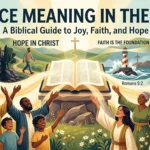
The meaning of grace in the Bible is more than kindness. It is more than mercy. Grace is God’s love freely given to people who could never earn it. Grace is His hand reaching down when we are weak. Grace is His voice saying, “I still love you. Come closer.”
Have you ever received a gift you did not expect?
That is what grace feels like.
The biblical meaning of grace has changed millions of lives. It brings peace to the guilty, hope to the broken, and strength to the tired.
As we explore the Christian meaning, biblical symbolism, spiritual message, and powerful Bible verses about grace, you may discover that God’s grace has been working in your life all along.
What Is the Meaning of Grace in the Bible?
The meaning of grace in the Bible can be explained simply:
Grace is God’s free and undeserved love, favor, mercy, and blessing.
Grace means God gives us what we do not deserve.
We deserve punishment for sin.
But God gives forgiveness.
We deserve separation.
But God gives relationship.
We deserve weakness.
But God gives strength.
That is grace.
Grace is not something we buy.
Grace is not something we earn.
Grace is not something we work for.
Grace is a gift from God.
This truth stands at the center of the Christian faith.
Grace in the Old Testament
Many people think grace only appears in the New Testament, but grace has always been part of God’s character.
From the very beginning, God showed grace.
Noah Found Grace
One of the first times grace is clearly mentioned is in the story of Noah.
In Book of Genesis 6:8, the Bible says:
“But Noah found grace in the eyes of the Lord.”
The world around Noah was full of sin.
People had turned away from God.
But God saw Noah.
God saw his faith.
God saw his heart.
And God showed him grace.
Grace often begins when God sees a heart that seeks Him.
Noah was not perfect.
But he trusted God.
And grace changed his future.
Moses Experienced Grace
Moses also experienced God’s grace.
God used Moses to lead His people out of slavery.
There were many hard moments.
There were mistakes.
There were fears.
Yet God stayed close.
In Exodus, Moses said:
“If I have found grace in Your sight…”
Moses understood something powerful:
God’s grace makes impossible things possible.
David Received Grace
David made serious mistakes.
He sinned.
He failed.
He cried before God.
But God forgave him.
Why?
Because grace is bigger than failure.
Grace does not ignore sin. Grace restores the repentant heart.
Grace in the New Testament
The New Testament gives us the clearest picture of grace through Jesus Christ.
Jesus came to show God’s grace to the world.
He healed the sick.
He forgave sinners.
He welcomed the rejected.
He loved the broken.
He gave His life on the cross.
That is grace.
Grace Brings Salvation
One of the most famous Bible verses about grace is found in Epistle to the Ephesians 2:8–9:
“For by grace you have been saved through faith…”
This verse teaches us something life-changing:
Salvation is not earned.
No amount of good works can buy heaven.
No amount of human effort can remove sin.
Only God’s grace can save.
Through Jesus, God offers forgiveness, eternal life, and peace.
This is the heart of the Gospel.
Grace Forgives Sin
Every person sins.
Every person falls short.
But grace says:
You can come back to God.
Think about the woman caught in sin.
Think about the tax collectors.
Think about Peter who denied Jesus.
They failed.
But grace restored them.
That same grace is available today.
No matter your past.
No matter your mistakes.
No matter your pain.
God’s grace still reaches for you.
Grace Gives Strength in Weakness
Grace is not only forgiveness.
Grace also gives strength.
In Second Epistle to the Corinthians 12:9, God says:
“My grace is sufficient for you.”
What a beautiful promise.
It means:
When you feel tired…
Grace is enough.
When you feel afraid…
Grace is enough.
When life feels heavy…
Grace is enough.
God’s grace carries us when our strength runs out.
The Spiritual Meaning of Grace
The spiritual meaning of grace touches every part of life.
Grace Teaches Humility
Grace reminds us:
Everything we have comes from God.
Our blessings.
Our salvation.
Our purpose.
Our strength.
Grace keeps pride away and brings thankfulness.
Grace Builds Faith
Sometimes life becomes difficult.
Prayers feel unanswered.
Doors stay closed.
Tears fall.
Yet grace reminds us:
God is still working.
Even in silence.
Even in waiting.
Even in pain.
Grace teaches us to trust.
Grace Changes Hearts
When people truly understand grace, they change.
They forgive others.
They become softer.
They become kinder.
They become more loving.
Why?
Because people who receive grace often give grace.
Grace in Daily Life
You may wonder:
How does grace appear in real life?
Sometimes grace looks simple.
Sometimes it looks ordinary.
But it is powerful.
Grace may appear as:
- Peace during hard times
- Strength when you feel weak
- Unexpected help
- Healing after pain
- Open doors
- Closed doors that protect you
- A quiet answer to prayer
Have you ever looked back and realized God was helping you the whole time?
That is grace.
Grace in Dreams and Spiritual Experiences
Sometimes people dream about light, forgiveness, water, or being embraced.
These may carry a spiritual message of grace.
Peaceful Dreams
A peaceful dream may symbolize:
- Healing
- Forgiveness
- New beginnings
- God’s presence
- Spiritual awakening
Emotional or Heavy Dreams
These may mean:
- God is calling you back
- Your heart needs healing
- It is time to let go of guilt
- You need prayer and surrender
Always seek discernment through Scripture and prayer.
God’s Word remains the foundation.
Practical Lessons from Grace
The meaning of grace in the Bible teaches powerful life lessons:
1. Accept God’s Love
Stop trying to earn what God freely gives.
2. Forgive Others
Grace received should become grace given.
3. Keep Praying
Even when answers seem delayed.
4. Trust God’s Timing
Grace often works quietly.
5. Never Give Up
God’s grace can rewrite any story.
Conclusion
The meaning of grace in the Bible is one of the most beautiful truths in Scripture.
Grace is God’s love.
Grace is God’s mercy.
Grace is God’s forgiveness.
Grace is God’s strength.
Grace is God saying:
“I see you. I love you. Come closer.”
No matter what your past looks like…
No matter how weak you feel…
No matter how many mistakes you have made…
God’s grace is still greater.
So walk forward in faith.
Trust His promises.
Receive His love.
And remember:
Where grace lives, hope never dies.